Spend five minutes online and you’ll find the same recycled “Italian rules” over and over: don’t order cappuccino after 11, don’t put pineapple on pizza, don’t ask for Parmesan on seafood pasta. Cute? Sure. True? Not always. Plenty of Italians drink their cappuccino in the afternoon and I know more than one Italian person that loves their pizza with pineapple on top. And if grandma wants to sprinkle cheese on her seafood pasta, no one really dares to stop her (though they will be really disgusted by it).
But if those are not necessarily true (just take them as a mix of best practices and straight-up lies), what are the real Italian cultural “taboos”? They are not about food, but about some topics that are still considered private, delicate, or even risky. And crossing those lines when talking with friends or co-workers can instantly change the mood of the room from warm and welcoming to chilly.
Let’s talk about the ones that matter the most!
You know how Italians can discuss football or food for hours and hours? That stops the very same moment you bring up salaries. I’m not joking, the air suddenly gets heavy and people stop chatting happily and try to find a way to “escape” the conversation. You can say that the money talk is one of the strongest taboos in Italian culture.
You don’t ask someone how much they earn or how much they spent on their new apartment. And most of the time, even close friends and families have no clue what each other makes. Even flaunting your wealth, like bragging about your new car or a holiday house in a popular destination, doesn’t really inspire admiration. It smells more of arrogance.
Now, younger Italians (let’s say 30 and under) are a bit more open than their parents and grandparents. Some happily discuss their salaries to find out if they’re paid fairly and you’ll find some of them complaining about rent increases with their friends and, sometimes, co-workers. However, you can say that money is still an overall private subject in Italy. So if you come from a culture where money talk is normal, try to keep it to yourself while in the Bel Paese. At least, until you know how open about it your new friends are!
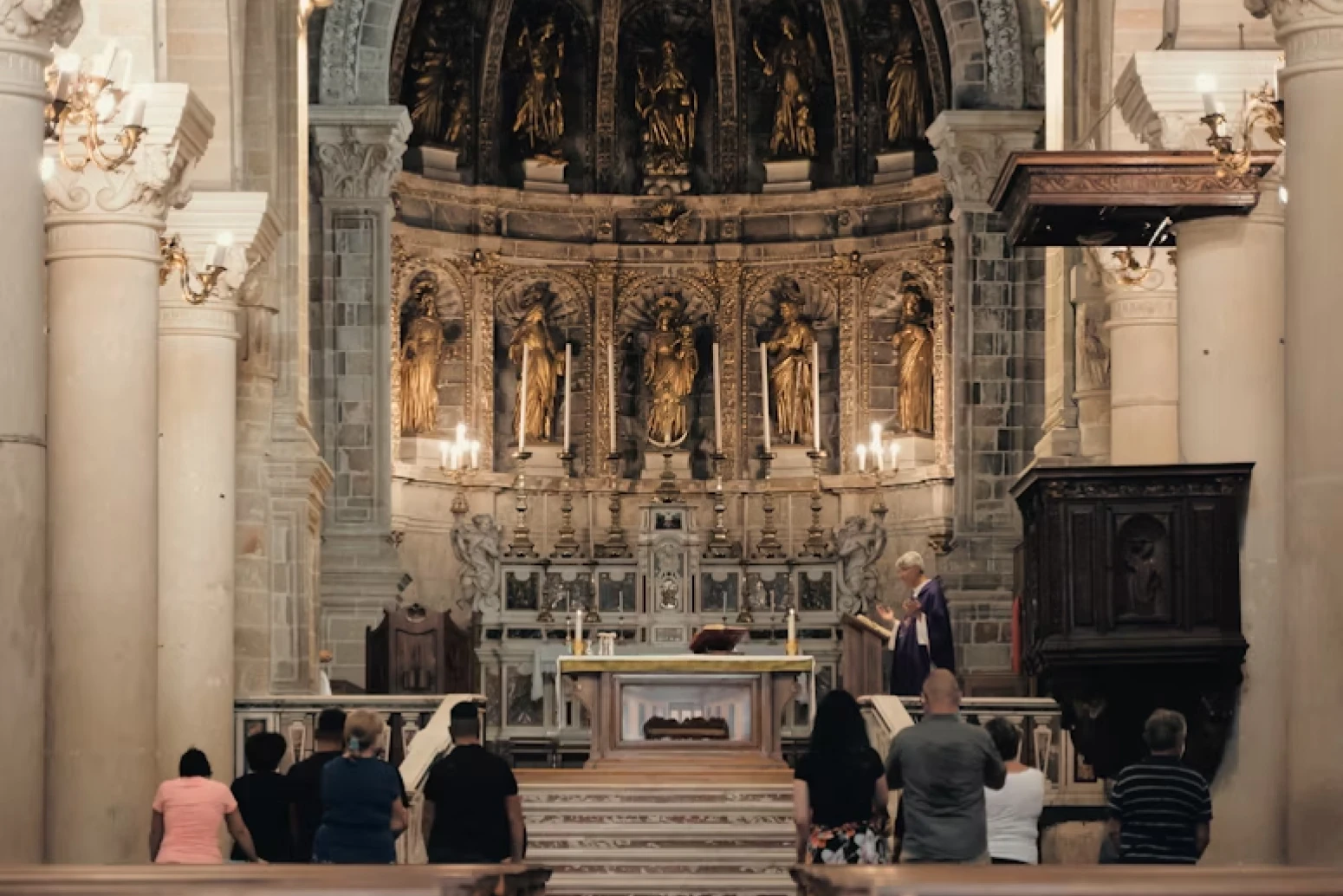
With religion, things get contradictory. A lot. That’s because, on the one hand, it’s still treated with a baseline of respect. After all, Italy is the heart of Catholicism, and symbols of faith are everywhere (e.g. crosses in all classrooms, saints’ statues in squares, and processions taking place in most towns and villages). On the other hand… Well, Italians swear using the very names of God, Mary, and all the saints. Loudly. And all the time.
Blasphemy is one of those strange “taboos” because while still being considered a taboo by most people, it’s still very much common. And in some regions, like Veneto or Tuscany, it’s practically a part of the dialect: people stub a toe or miss their bus and out comes a blasphemy. In other places, though, especially in the South, blasphemy is harsher and seen as offensive.
So what’s the deal? Basically, Italians can do it. We can criticize religion and we can swear as much as we want. You, as a foreigner, cannot. It’s one of those “insider” things that we don’t really pay attention to as long as they come from an Italian. But as soon as a foreigner mutters something blasphemous, it makes jaws drop.
Listen, it’s not like Italians never talk about politics. They do, and sometimes they even talk about it with friends and family around the table. The point is, it’s rarely a “safe” topic because Italian politics is messy, layered, and tied to decades of history. And what’s more, strong political allegiances (mostly from older people) and a deep cynicism (from the younger Italians) make it an even more difficult topic to deal with, especially if you’re looking for a serious confrontation. You might end up against a wall of blind faith or suddenly find yourself talking to someone that uses irony and sarcasm to end the discussion.
That said, politics doesn’t destroy families or friendships. Yes, arguments can break out with those you’re closer to, but most of the time people just roll their eyes and change the subject. The only thing Italians really dislike is prying. Don’t ask them directly who they voted for or you might be in for a few embarrassing moments. And just don’t compare politics unfavorably to your own country, we all know that it’s a mess everywhere in the world.
So, is politics off-limits? Not exactly. But it can be a minefield. Read the room and maybe save it for when you know people well. Until then, football and food are much safer topics!
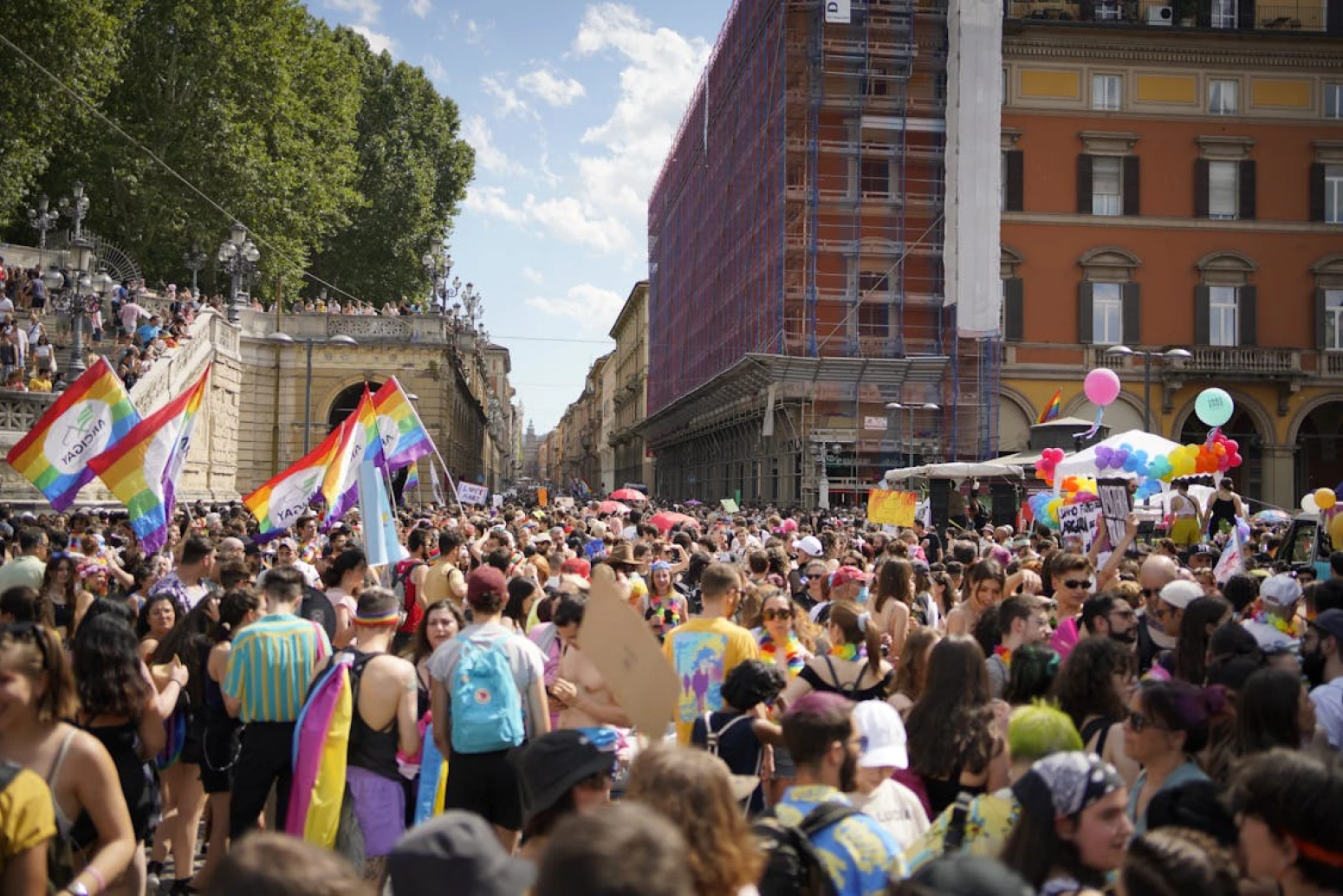
Italy is a country of contrasts in every respect. This is even more highlighted when discussing gender and sexuality. In bigger cities you find Pride parades, gender-inclusive campaigns, and young Italians who push for equality. In smaller towns, instead, traditional gender roles are still quietly expected and people frown upon anyone too “different.”
For this reason, conversation about gender identity and sexual orientation can be delicate. Same-sex civil unions only became legal in 2016 (that’s only 10 years ago!) and public display of affection between same-sex couples can still draw stares outside the big cities. And, especially, among older generations, anything LGBTQ+ related can be uncomfortable territory.
But, trust me, this doesn’t mean Italy is hostile. People are just more or less comfortable with these topics depending on where you are and who you’re with. As we said, most older people are still annoyed at anything less “traditional.” But young Italians are challenging machismo, talking about feminism and sexuality, and normalizing conversations that were once untouchable.
It might be less visible, but the topic of mental health is just as real. For decades, Italians only whispered about it, if they talked about it at all. Therapy was for “crazy people,” depression was brushed off as laziness, and anxiety was something you were expected to tough out. And families kept these struggles private, more often than not out of shame.
That’s changing, slowly, thanks to young Italians. Having been influenced by global conversations and social media, they are opening up about anything related to mental health. Even therapy is becoming more and more common (it’s just not widely admitted). But among older generations, the stigma is stubborn. Try saying “I see a psychologist” to a group of 60-somethings: it will surely earn you some awkward silence.
So keep this in mind: the evolution is real, but foreigners tend to overshare, not realizing how reserved many Italians are about mental health. Just remember that it’s not like they don’t care but more like, culturally, mental struggles aren’t something you throw on the table during an aperitivo.
We help you experience Italy with guidance, support, and programs designed for real life abroad!

.webp)

.webp)
.webp)
What is Italianforawhile?


Enrollment and admissions


