One of the most striking things I’ve noticed since moving to Italy is how this country lives in constant dialogue with its past. Every cobblestone, piazza, or bell tower feels like it carries a story. But Italy doesn’t just preserve its history — it performs it, it celebrates it, and in some ways, it struggles with it. That’s something I’ve come to see firsthand through the traditional festivals I’ve experienced here, especially in Turin and nearby cities like Ivrea. These moments have helped me understand how Italian culture holds onto its history — the good, the brutal, the beautiful — even as it tries to evolve.
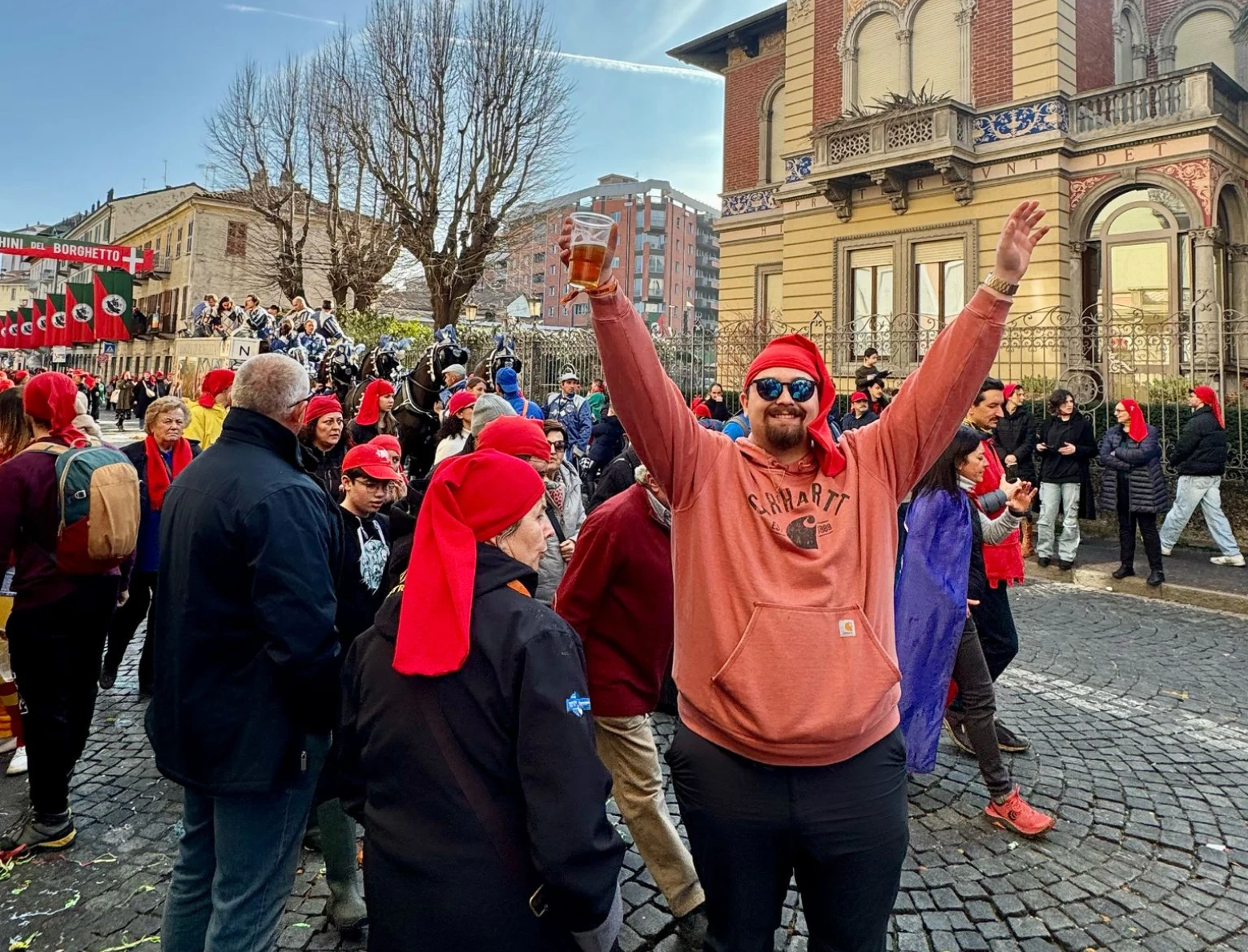
One of the most unforgettable cultural experiences I’ve had so far was attending the Orange Festival in Ivrea. Before going, I’d heard it was intense — people throwing oranges at each other in the streets — but I had no idea just how wild and layered it would be until I got there and understood the story behind it. The festival isn’t just a quirky town tradition. It’s a dramatic retelling of a violent but empowering legend: a young girl who was nearly assaulted by a ruling general fought back, killed him, and inspired the townspeople to rise up against the corrupt leadership. In the festival, the people on foot represent the rebels, while those on carts symbolize the oppressive nobility. The battle is recreated by hurling thousands and thousands of oranges — a symbol of defiance and chaos, resistance and memory.
The experience is overwhelming in the best way. You’re dodging oranges, slipping on peels, laughing with strangers. The entire town transforms into this charged, historic reenactment, but it never feels overly formal or theatrical — it feels alive. There’s something youthful and almost mischievous about it, yet it’s rooted in a deeper truth. It reminded me that tradition in Italy isn’t always about polished ceremonies. Sometimes, it’s about storytelling through the senses — through color, smell, movement, and mess.
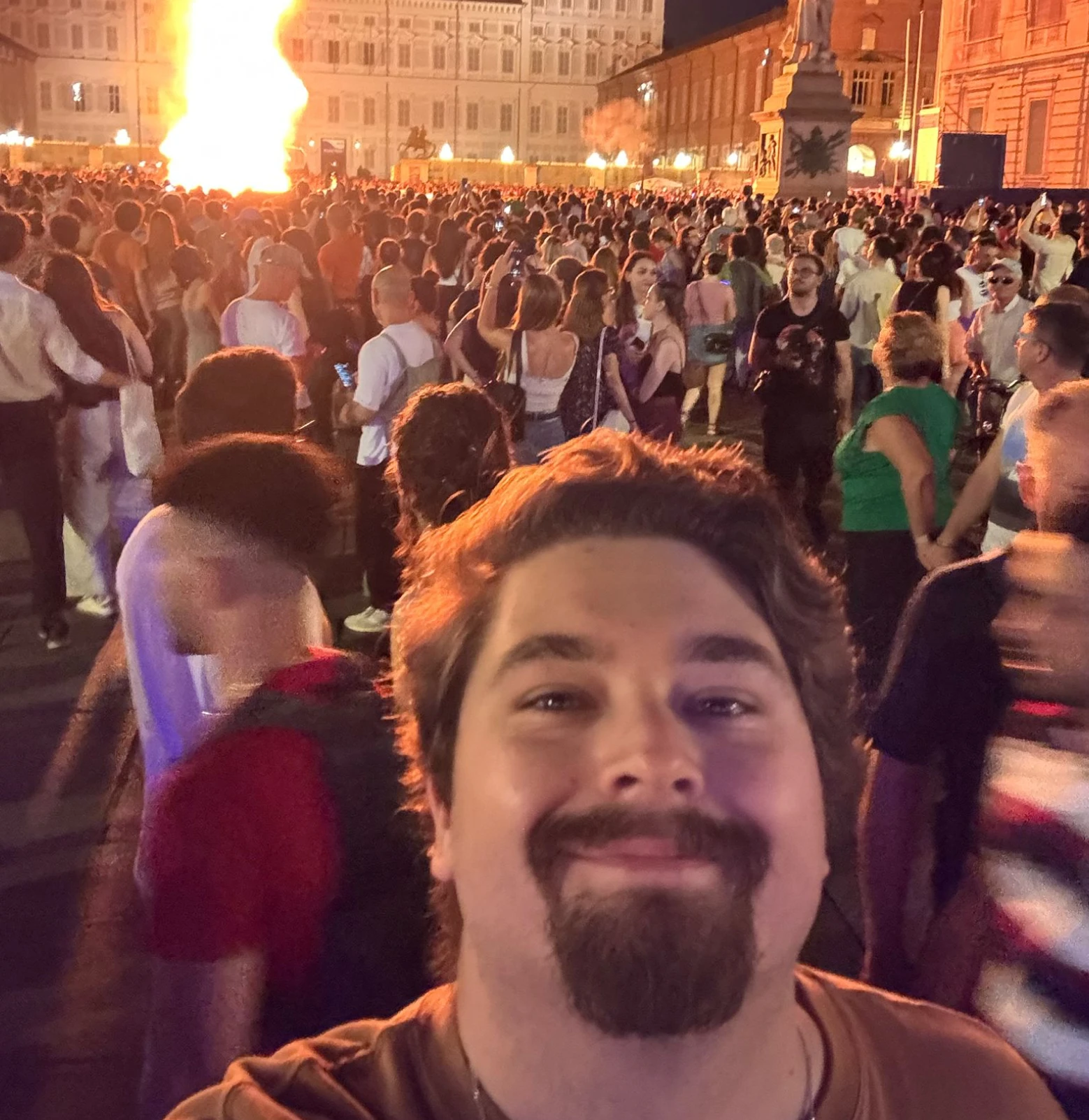
Back in Turin, I also had the chance to be part of other significant celebrations, like May Day — Festa dei Lavoratori. It's both Labor Day and a commemoration of Italy’s resistance and liberation during World War II. On this day, the city becomes one big, shared memory. People flood the streets with flags and music; you can feel the presence of history walking beside you. At the same time, it’s not all solemn. It’s also a day of joy, relaxation, and community. Shops are closed, businesses pause, and the whole city seems to exhale. Parks are full of families having picnics, people are dancing in the streets, and friends are simply enjoying each other's company. It’s like a collective timeout — a moment to remember, to celebrate, and to rest together.
That kind of public togetherness feels different than what I was used to in the U.S., where even on national holidays, people often celebrate separately or keep things moving. In Italy, you feel this shared pulse, a kind of national rhythm that values presence, not productivity.
These moments helped me understand something deeper about Italian culture: the tension between tradition and innovation isn’t just philosophical here — it’s something you live with every day. Italy is a country that fiercely protects its identity. People speak with passion about their regional food, their dialects, their local festivals, and family roots. Every town has its story, and people take pride in preserving those layers. This connection to place and history is beautiful — grounding, even. But it can also make adapting to change more difficult.
Unlike in the U.S., where progress often comes fast — sometimes at the cost of memory — Italy can be slow to evolve. There’s often resistance to updating buildings, changing infrastructure, or modernizing public spaces, especially when it risks interfering with historical heritage. That means some urban areas are overloaded with tourism, congested, and in some cases, outdated. Things like air conditioning, efficient transportation, or city planning for the 21st century often lag behind, because there's so much care taken not to disrupt the past.
In contrast, American culture often leans hard in the other direction. We are more likely to bulldoze the old and replace it with the new. If something’s outdated, we upgrade. If a piece of history is uncomfortable, many prefer to erase or ignore it rather than engage with it. There’s a constant push to move forward, reinvent, streamline. While that can lead to innovation and ease, it can also result in cultural amnesia — a loss of deeper connection to who we were, and how we got here.
Italy, for all its contradictions, doesn’t allow you to forget. It holds on — sometimes stubbornly, sometimes beautifully — to its past. You see it in the architecture, in the festivals, in the way the older generations still command respect and tell stories that anchor the present. But that doesn’t mean it’s not changing. In places like Milan, and even here in parts of Turin, there are clear signs of evolution. Young Italians are blending tradition with fresh perspectives — launching startups, reimagining spaces, fighting for social justice, environmental reform, and inclusion. You can see the old and new side by side — a church next to a sleek design studio, a centuries-old bakery using TikTok to reach a new audience.
Living here has challenged the way I think about progress and identity. I come from a place where we often believe that innovation means shedding the past. But Italy shows that it’s possible — and maybe necessary — to hold both. To celebrate the oranges flying through the air and also create space for something new. To shut down the city for a day and remember. To march forward while still looking back.
Our programs will help you create your own unforgettable Italian story!

.webp)

.webp)
.webp)
What is Italianforawhile?


Enrollment and admissions


