Coming to Italy for a gap year or study abroad program is both exciting and overwhelming at the same time. And chaotic, at least at the very beginning. For a few days, you’ll be moving from “Wow, I actually live here now” to “How do I even buy a bus ticket?” back to “I love my new Italian life.” And then repeat it again, all while you still can’t understand the language.
The good news? Those first days are a weird blur for everyone. And with a solid checklist and a bit of direction, you can make the first week smoother and easier!
This one is a time-sensitive topic, so don’t push it off. Even if it feels impossible.
As you should know, if you’re not an EU citizen and you’re staying in Italy for more than 90 days, you need to apply for the Permesso di Soggiorno. This is a document that allows you to legally live in Italy for up to one year and, to get it, you must start the process within 8 working days of arriving in the country. Basically, right away.
Here’s a quick breakdown of what you’ll have to do:
If you’re part of a program, the responsible team will generally help you with this (eg. giving you information of where to go and what to do). However, even if you’re not, there’s no need to panic: thousands of students complete this process with no problems every year. You simply have to go for it. Trust me, “future you” will hug you for getting the work done as early as possible!
Getting an Italian SIM card is one of those errands that pays off immediately. Because you can (and likely will) survive on Wi-Fi for a day or two, but it gets inconvenient incredibly fast. Between navigating unknown cities, joining program chats, figuring out bus schedules, and logging into banking apps that send verification codes, having real data at hand is essential!
The process itself is pretty simple. You just need to find a carrier store (like WindTre, TIM, Vodafone, Iliad, and many others) and get the courage to go talk to the staff. Then, with just a passport and a few minutes of patience you’ll be done. And it won’t even cost that much: plans in Italy are usually somewhere between 10 and 20 euros per month, depending on how much data you actually need.
Once your Italian number is active everything becomes easier, from chatting with your new classmates to checking your bank account balance. So, if you’re staying for more than a few weeks, don’t procrastinate too much and get your Italian SIM card as soon as you can!
This sounds kinda obvious when you read it, but you’d be surprised to know how many people land in Italy only to discover their bank card is blocked or their mobile banking app won’t open for some reason.
During the first couple of days in Italy, make sure it all works by doing this:
Trust me. Knowing you can access your money without problems will make the rest of your time abroad way easier.

Italy can be as affordable or as expensive as you make it. So, if you still haven’t set a budget, the first week here is the perfect time to do it. During the first few days you’ll get a rough idea of how much groceries, public transport, and social activities cost and it will be easier to set a realistic budget. It will help you avoid unpleasant surprises during your experience!
Also, keep these few things in mind:
During the first few days you’re in Italy, take a little time to set up the apps you’ll rely on constantly. And remember, you don’t need to download everything under the sun; just the basics will be okay to make daily life smoother. So, make sure you download your maps, translations tools, and local transports apps. Because you’ll end up using them far more than you expect.
It’s also smart to log in to your banking and payment apps early, since some of them ask for new verifications once you change country or phone number. And because most communication in Italy happens through WhatsApp (your program, classmates, landlords, literally everyone) make sure it’s linked to your Italian number right away.
Just don’t overthink this step. The goal is only to get your main tools working so you’re not stuck troubleshooting when you’re tired, lost, or late. After all, a little bit of early setup goes a long way!
Your first grocery fun in Italy will probably feel like a cultural event. Everything is different from what you’re used to: the layout, the brands, the products on display… And nothing is where you’d expect it to be.
Try not to overthink it and pick up the bare necessities:
Don’t do a huge grocery haul the first day. That can wait until you learn more about the stores in your area. Your preferences will shift quickly once you learn more about prices, Italian products and quality!
Understanding where places are is one of the quickest ways to feel at home in a new country. During your first week, take a little time to walk around your neighborhood and understand what’s around you and how long it takes to get there.
And don’t forget to check where these places are:
Once you’ve located them and know how to reach them without relying on maps, everyday life starts to feel a lot less chaotic. You’ll remove a huge amount of daily stress, and after a few walks, the city will start to feel just like home.
Italian public transports can feel confusing at first. We all know it. That’s why understanding the main points early on will save you a lot of stress.
During your first week, spend some time learning the basics of transportation in your city:
And remember: always validate your ticket, either by tapping it digitally or stamping a paper ticket in the small yellow or green machine. This is valid in all cities and will avoid some very steep fines!
Even if you’re introverted and not the most social person out there, make a conscious effort in the first week to meet people. Most people are new and, just like you, they are still adjusting to Italian life. More likely than not, they want friends too. And the first week is the easiest moment to connect with others.
Here are a few things you could try to do:
Some of your closest friendships may start during an awkward lunch or coffee break or trying to figure out together how to get to a post office in time!
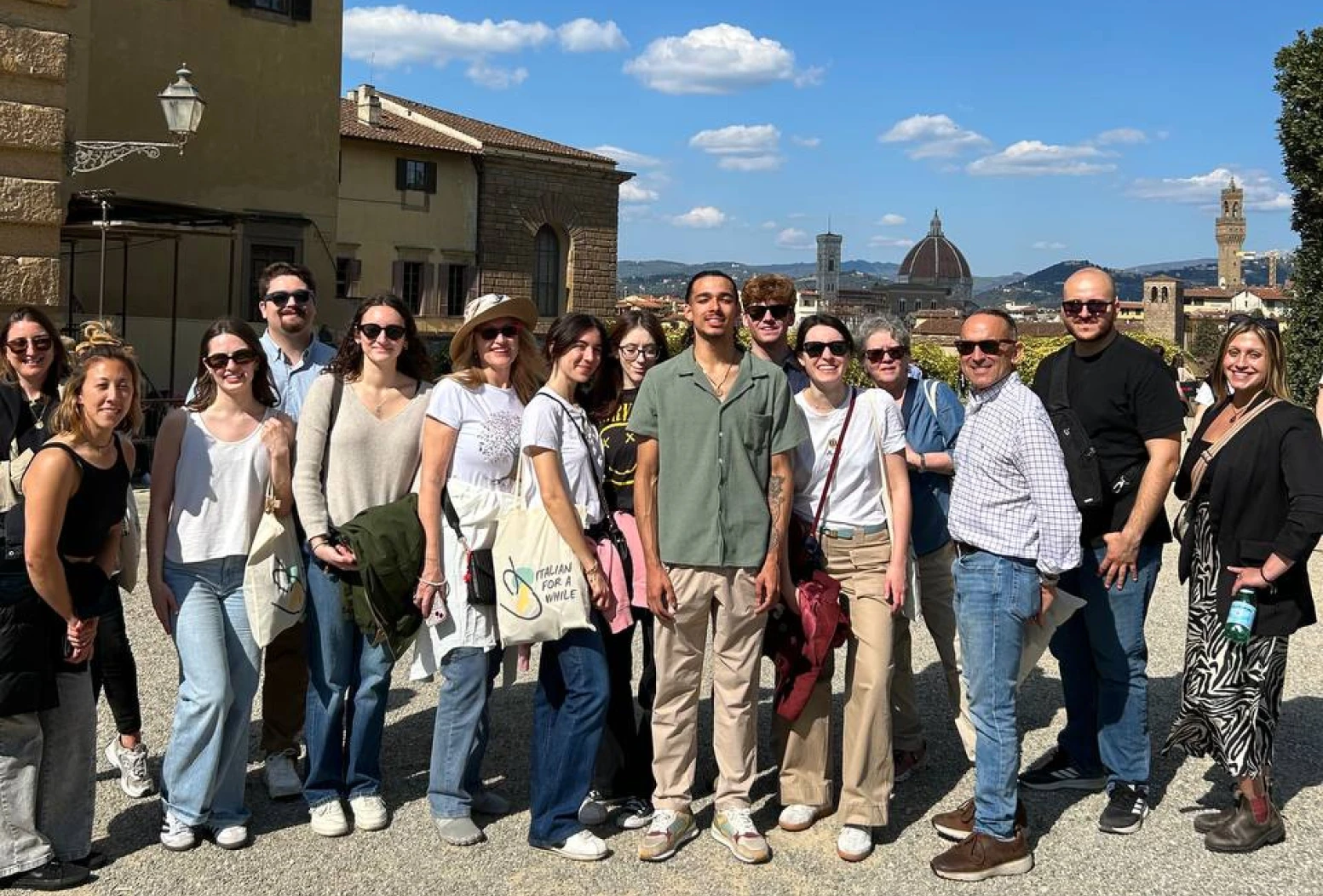
Yes, you’re still settling in. And yes, you might still be jet-lagged. But taking a small trip helps break the routing of errands and logistics. It doesn’t even have to be a full-scale weekend getaway; it can be just a few hours in a nearby town, a museum visit, or a walk in the city. Anything that makes you relax and actually reminds you why you came to Italy.
Depending on your city, easy first-week options include the following.
Keep it as light and fun as you need, and try to ask some of your new friends if they want to join you. You deserve to enjoy your surroundings, not just survive them!
Our programs combine language learning, cultural immersion, and full support!

.webp)

.webp)
.webp)
What is Italianforawhile?


Enrollment and admissions


