If you look at the marketing brochures, a gap year (no matter where you go and what you do) is often sold as a stealth “resume-builder.” It’s a chic stepping stone to make you more employable or polished. To teach you a new skill, to learn a new language, to get internships or work on side projects, to volunteer.
But talk to the students who actually take the time to spend months living abroad and a different story emerges. They don’t talk about networking or portfolio padding. They talk about “unlearning.” They talk about those quiet, uncomfortable internal shifts that happen when you strip away the background noise and let a foreign country rearrange how you relate to time, space, and yourself.
Here are four of the lessons our students actually learned when they traded their “scripted life” for an Italian experience!
In places like the United States or Australia, life runs on velocity. You have to be efficient in everything you do and you have to have a full calendar every single day (or it will feel like a personal failure). And you are conditioned to measure your worth by your output.
When you land in Italy, that stops. Suddenly. Because the culture here doesn’t really reward frantic optimization. It rewards presence.
Let’s take Joshua, for example, who spent over a year abroad across Turin and Milan. In America, he noted, life is built on a “go, go, go” mentality where you reach a goal and immediately set out for the next one. But in Italy, people don’t ask you about your next career goal. They ask you about dinner, or about your weekend. And that shift gives you permission to breathe.
The physical environment itself changes your internal state. Greta, coming from the San Francisco Bay Area, sold her car to move to Milan. As she settled down, she realized that back home everything was built for convenience. From giant refrigerators to the habit of driving everywhere. But in Milan? She found herself walking forty minutes home by choice, taking a different route everyday and discovering hidden parts of the city, only to realize that she felt healthier than ever. Because her life had slowed down into a human scale.
Even Jessica, an adult participant from Australia, noticed the exact same friction. She came from a life where everything moves at breakneck speed, but in Italy she fell in love with a lifestyle that’s centered on quality: long meals, proximity to family, and actual space to exist without having to always rush toward the next item on a checklist.
What’s the lesson here? Definitely not “be lazy,” but realizing that a life spent on optimization is a life you aren't actually participating in!
If you are a planner (just like me), a strict schedule is like a security blanket. It protects you from the terrifying possibility that things might go wrong.
But travel has a funny way of shredding security blankets within the first forty-eight hours.
Take Hamish, an Australian student who split his time between Florence and Sestri Levante. He learned this the hard way. He described himself as a rigid planner with an always meticulously booked calendar, and then Italian reality hit. Trains were late and plans unraveled. At one point, he even found himself stranded in Pordenone. But instead of melting down over a broken itinerary, he did something radical for him. He let go. Walked into the city, found a great pizza place, and turned an inconvenience into one of his favorite memories, learning that sometimes you just have to stop fighting the current and go with the flow.
The spontaneity you learn can also transform the way you build a social world. Cambria, who took a gap experience in Milan right after school, found herself walking down the street when a group of travelers from Japan walked past. Because she wasn’t rushing to a destination, she and her friend Evie (another gap student in Milan) stopped to talk. They ended up spending hours exchanging stories about Japan and America. This would have never happened if they were glued to an itinerary!
Nobody likes feeling lonely. And nobody likes feeling like they’re the only person in the room who doesn’t know the language or how to buy groceries without looking stupid. Unfortunately, the first couple of weeks abroad are often defined by that. And by a quiet panic.
Evie, for example, moved to Milan having barely ever left her home country. She realized very quickly that she didn’t really know how to be alone. She spent her first few weeks scared of sitting in her room alone, and walking into a school where everyone else seemed ahead of her made her feel inadequate. Yet, the breakthrough came from that discomfort. One afternoon, feeling low, she forced herself to walk out of the apartment and go to a local thrift shop just to do something that made her happy. There, she chatted with a clerk her own age. That’s what sparked hope for her, leading her to say “yes” to invitations she initially wanted to dodge!
Gianna experienced a similar baptism by fire in Rome. Only that her “enemy” was the language. Moving from Michigan after college with zero knowledge of Italian, she found out that even basic, everyday tasks that should have been effortless felt like climbing a mountain. She was lucky enough to live with an Italian host who spoke almost zero English though, which forced her out of her comfort zone every single day.
Down in Salerno for her history and archaeology study abroad program, Lauryn ran headfirst into a culture clash too. Coming from a small American town where life happens inside cars and in quiet driveways, the constant social buzz of southern Italy caught her completely off guard. Everywhere she looked, people were gathering and taking up space outside. And at first? It felt too much. But staying in the town for months forced her to adapt, turning her initial culture shock into real self-reliance.
It turns out confidence isn't an innate trait. It’s just what happens after you survive a few weeks of messing up your words, getting lost in strange neighborhoods, and realizing you can actually fix your own problems!
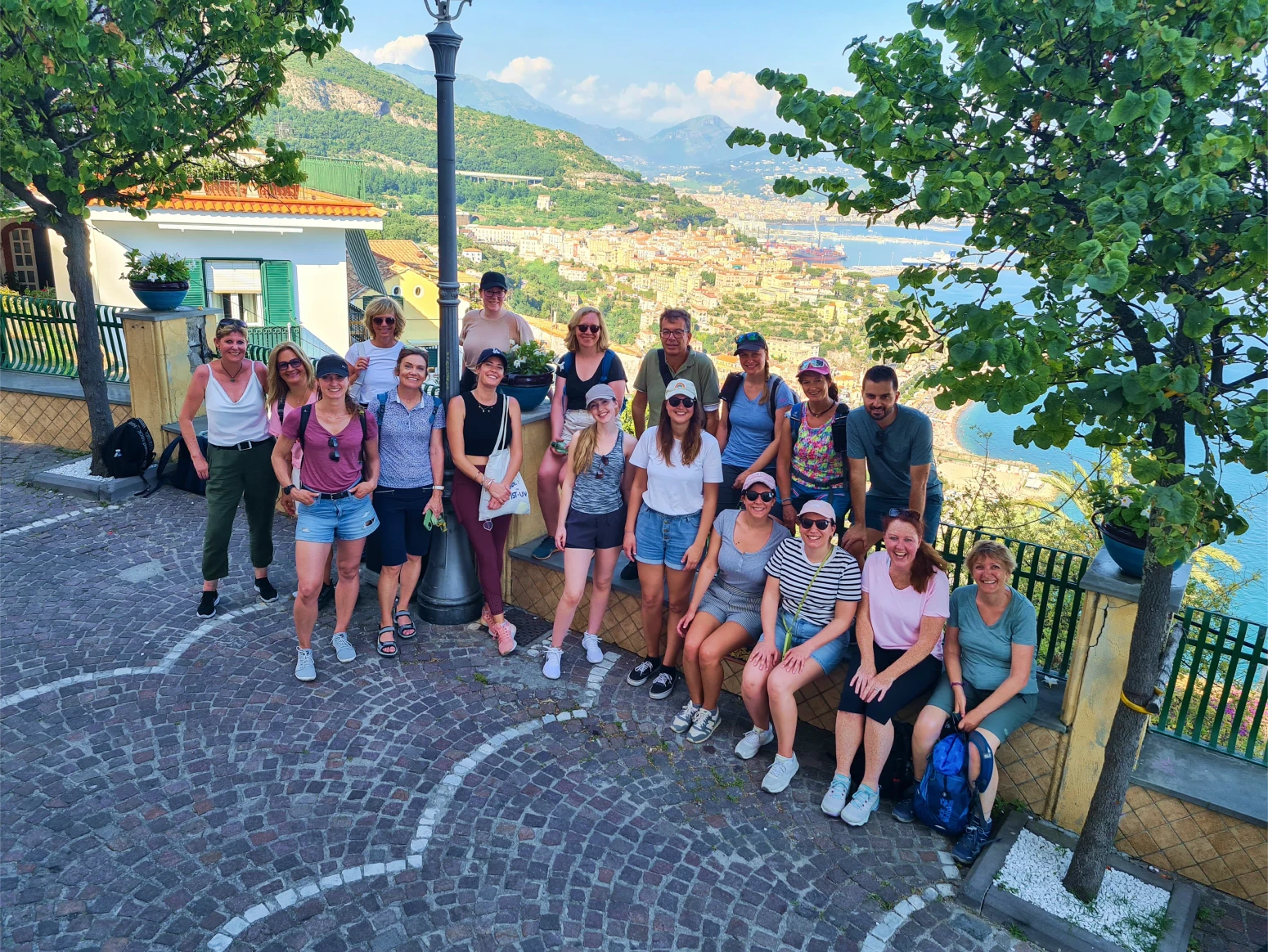
Perhaps, the deepest transformation has nothing to do with Italy itself and everything to do with you removing yourself from the social pressure cooker of your own hometown. Without the expectations of parents, peers, or professors, everything suddenly sounds a lot quieter.
Our student Andi went straight from high school into nursing school out of sheer momentum, without ever stopping to ask if she wanted it. One year later? Burned out, dropped out, spending time working as a waitress just to find some breathing room before flying to Florence for four months. And after those four months instead? She finally had the mental clearance to realize that her life didn’t need to follow a pre-programmed path to be valid. She could and should make her own choices when it felt right to her.
Gianna felt the exact same weight after graduating with a degree in graphic design and marketing. Her peers were all diving into corporate jobs because “that’s what’s expected.” But she knew that, deep down, her path was misaligned. And hitting pause in Italy gave her the time she needed to realize that it’s fine to rewrite your script. Even if it deviates from the norm.
And even for Hamish, who came to Italy wanting to reflect on his dream of becoming a pilot, the time away was critical. He questioned everything. He even wondered if he should stay longer in Italy or change his study field entirely. By the time he left, the time away didn’t change his final destination, but it changed his ownership of it. He knew he wanted to fly. But it was because he chose it, not because it was a box to check in his life plan.
When students pack their bags to head home after an experience abroad, they don’t just return as corporate machines optimized for a Linkedin profile. They come back quieter at times, sharper, and more resilient.
That’s because they learned that a late train sometimes is only an invitation to explore. Or that loneliness is temporary and not a permanent state. Or that slowing down doesn’t mean falling behind. Or, more importantly, that they are fully capable of dropping into an unfamiliar ecosystem and building a life out of scratch.
And once you learn all that, you realize you can do basically anything.
Our programs combine language learning, cultural immersion, and full support!


What is Italianforawhile?


Enrollment and admissions


