Everything you need to know about taking a Gap Year
July 8, 2026
Gap years have become (and are still becoming) increasingly popular. Most people at some point of their life choose to leave it all behind and take a gap year to follow their dreams of adventure, learn something more, or even simply take a break. But what are they exactly? Why do people take gap years? And what are the most popular destinations?
They are typically taken during a moment of change
And the last part of the definition is the real core of a gap experience: experiential learning, that is a process characterized by hands-on engagement, critical reflection, and personal agency (as described by the Association for Experiential Education).
Through active engagement and the integration of intellectual, emotional, and social dimension, this process entails a cycle of challenge, experience, and reflection that culminates in profound insights and meaningful growth. And this is exactly what a gap year does: thanks to personal and unique experiences in a different country with different habits and values, people are actively engaged in investigating, experimenting, and solving problems creatively, experiencing both success and failure along with adventure and uncertainty.
And what does this continuous learning process result in? Change in one’s point of view and, thus, personal growth.
What does a gap year actually look like?
Gap experiences are as diverse as the individuals who embark upon it. From volunteering in remote communities to interning at innovative startups or backpacking through Europe, the possibilities are as vast as they are varied. The essence of a gap year lies indeed not in the activities one pursues, nor in its length. It lies in its capacity to catalyze personal growth, broaden horizons, and foster a sense of purpose and direction.
And who, typically, embarks on gap years?
While traditionally associated with recent high school and college graduates, the appeal of gap years transcends age and background. Whether looking for a break from the rigors of academia, contemplating a career change, or simply craving adventure and exploration, people of all ages and professions are drawn to the transformative potential of this experience.
Why do people take Gap Years?
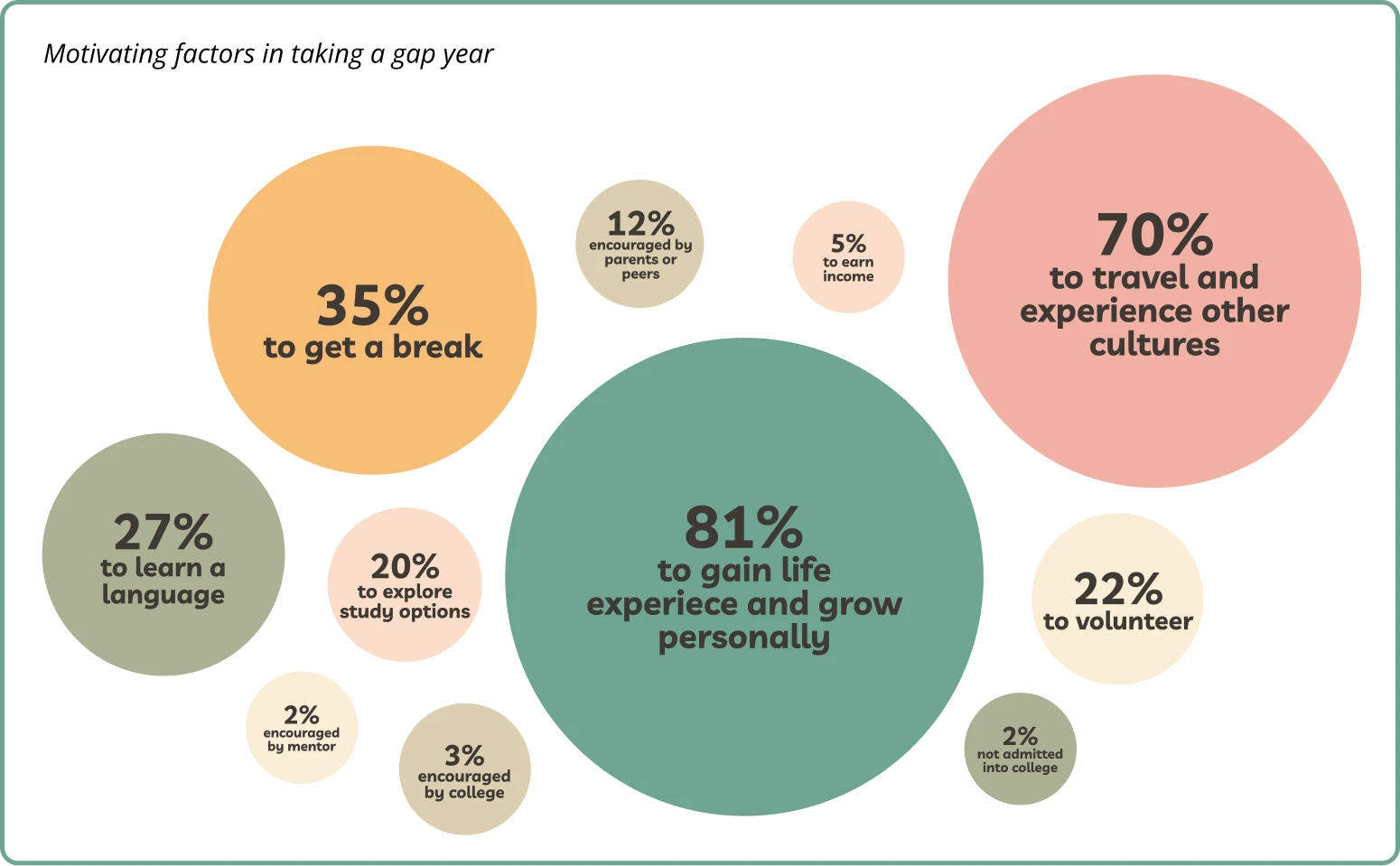
According to survey data by the Gap Year Association, reasons for taking gap years vary widely, reflecting the unique aspirations, interests, and circumstances of each individual. From seeking personal growth and cultural exploration to addressing burnout and navigating transitions in academic or professional pursuits, the reasons behind gap year decisions are multifaceted.
What we can ascertain for sure is that the overwhelming majority of respondents (81%) mentioned gaining life experiences and growing personally as the motivating factor in taking a gap year. This highlights the gap year’s central role in fostering personal growth and development whether through travel (70% of respondents), volunteer work (22% of respondents), or language study (27% of respondents) and confirms the invaluable opportunities that these experiences offer to challenge oneself, acquire new skills, and expand horizons.
With over a third of respondents (35%) citing burnout and the need for a mental and emotional break, the importance of prioritizing one’s well-being and balance in academic and professional pursuits also arises as one of the main reasons to take a gap year. The experience is indeed often perceived as a chance to recharge, rejuvenate, and rediscover one’s passion for learning and personal growth.
Last but not least, the role played by one’s support network (be it parents, counselors or mentors) plays a significant role in influencing gap year decisions. Even if the motivation to take a gap year has to come from the individual, encouragement and support from trusted people can indeed provide the confidence to actually embark on this transformative journey.
Where do people go during their Gap Year?
Let’s start by saying this: during a gap year you can visit more than one country. And, according to research by the Gap Year Association, most people do visit at least two countries during their sabbatical. Two thirds of the interviewees reported indeed that they had spent their gap year in more than one country, while only 34% of participants reported spending their gap year in a single country.
But where exactly do people spend their gap year?
Unsurprisingly, Europe is the most common continent for gap year experiences, with 32% of participants choosing it. Cultural heritage and lively cities, paired with accessibility and ease of travel, make Europe indeed one of the most enticing destinations for people looking for experiences abroad. Following closely behind is Asia (29% of participants), a continent that captures the interest of gap year participants because of its kaleidoscope of cultures, traditions, and landscapes.
Then, the Middle East (25%), North America (24%), South America (22%) and Africa (19%), maintaining a strong position among people looking for adventure, volunteering experiences and internships abroad. At the lowest levels we have Oceania and the Caribbeans/Central America, still totaling a good 30% of participants choosing them as destinations but not as much visited because of the long travel and difficulty to move around once reached the main destination.
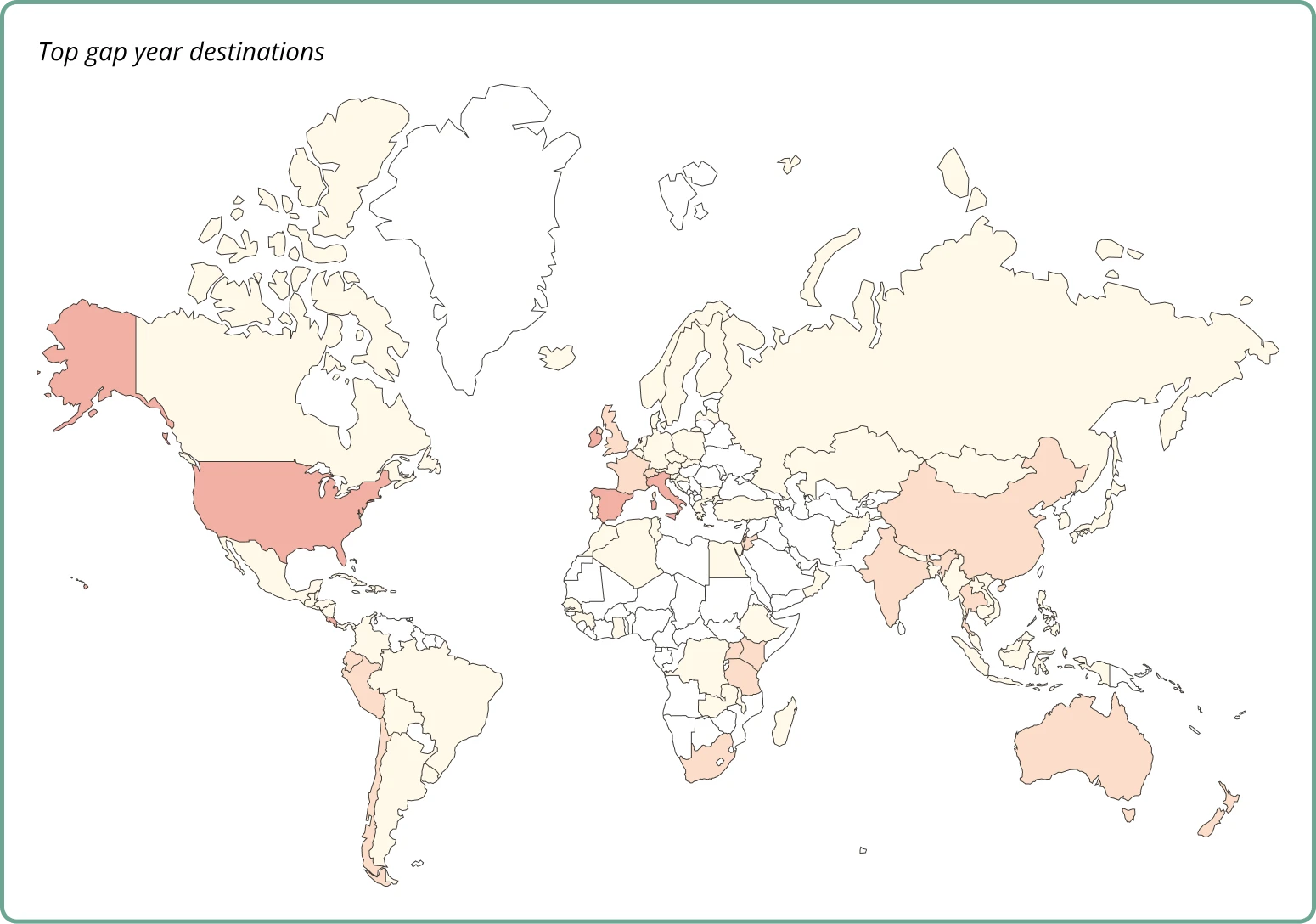
What about the countries people go to? Among the many destinations, there are five destinations that are certainly popular:
USA, popular because of its diverse cities and because of the American dream, an idea that still encourages thousands of people to visit the country each year.
Spain, a country known for its welcoming atmosphere, affordability and well-developed infrastructure, making it a top destination for people looking for a mixture of relaxation and adventure.
Italy, whose accessibility and reputation, together with the promise of the dolce Vita (which is always fascinating for people from all over the world) has been attracting gap travelers for years.
Ireland, the perfect destination for those travelers seeking outdoor adventures and cultural experiences in stunning natural landscapes without the need to learn a new language.
Costa Rica, a real paradise for travelers seeking an immersive experience while still prioritizing responsible travel and environmental awareness.
Moreover, Italy holds a special appeal for those with Italian heritage. In fact, many people with Italian roots are drawn to the country to reconnect with their family’s origins, explore their cultural identity, and build deeper connections with their ancestral land. And this personal journey of rediscovery adds an extra layer of significance to the gap year experience, making it a profoundly enriching adventure!
But why is Italy so popular as a gap year destination?
Italy offers a captivating blend of history, culture and stunning landscapes, providing a unique opportunity for immersion in its rich heritage.
With a variety of UNESCO World Heritage sites scattered across the country, there’s an abundance of wonders waiting to be explored.
From its cities to the wonderful countryside, the country caters to a wide array of interests and passions.
The possibilities for personal and academic growth are limitless, with opportunities to expand one’s horizons, broaden their perspectives, and develop valuable skills.
Italy's renowned hospitality, lifestyle, and emphasis on community create an ideal environment for building meaningful connections, forging lifelong memories, and experiencing the warmth and camaraderie of Italian culture.
Download our programs guide to learn more!
Thank you! Your catalog is on its way!
Looking for more information and personalized advice? Complete the enrollment form now to book your free call with one of our experienced gap year counselors.
Oops! Something went wrong while submitting the form.
Download and save this guide!
Thank you! Your guide is on its way!
Meanwhile, why not explore our gap programs in Italy? They’re a fantastic way to reconnect with your Italian roots! Complete the enrollment form now to book a free call with one of our experienced gap year counselors
Oops! Something went wrong while submitting the form.
What cities should you visit during your gap year in Italy?
If you’re looking for the perfect Italian destination, here are a few cities to consider for your gap year in Italy. Each of them is charming and will offer you countless experiences that will broaden your horizons and leave you with unforgettable memories!
Milan, the fashion capital of Italy, where you’ll be able to visit centuries-old landmarks nestled in between sleek and modern skyscrapers just before heading to an aperitivo with friends in the trendiest cafés.
Sestri Levante, on the picturesque Ligurian coast, where you can relax on beautiful beaches, explore the charming pastel-colored old town, and embark on scenic hikes in the nearby Portofino Natural Park.
Venice, an enchanting maze of canals, perfect to immerse yourself in the romance of the “old Italy” while discovering its mouth-watering cuisine in its charming alleys, historic piazzas, and quaint cafes.
Florence, the cradle of the Renaissance, where you’ll marvel at the stunning architecture and the masterpieces by Michelangelo, Leonardo da Vinci, and Botticelli in all the picturesque streets of the historic center.
Genoa, a fascinating port city where you’ll be able to wander through the historic old town, explore world-class museums, and savor the authentic flavors of Ligurian cuisine at local trattorias and bustling markets.
Turin, a city of elegance and refinement, where you’ll admire the grandeur of Italy’s old capital just before indulging in chocolate and gelato at the city's many delightful cafes, patisseries, artisanal chocolatiers, and local gelaterias.
Naples, where ancient ruins, bustling markets, and mouthwatering cuisine await around every corner, along with world-class museums offering a glimpse into the city's rich history and cultural heritage.
Cefalù, on the tranquil shores of Sicily, where golden beaches, medieval architecture, and azure waters create a picture-perfect setting to wander through the historic old town, relax, and soak up the sun.
Rome, the eternal city steeped in history and legend, where you can lose yourself among ancient ruins, Renaissance palaces and bustling piazzas inviting you on a journey through millennia of human civilization.
What are the outcomes of a Gap Year?
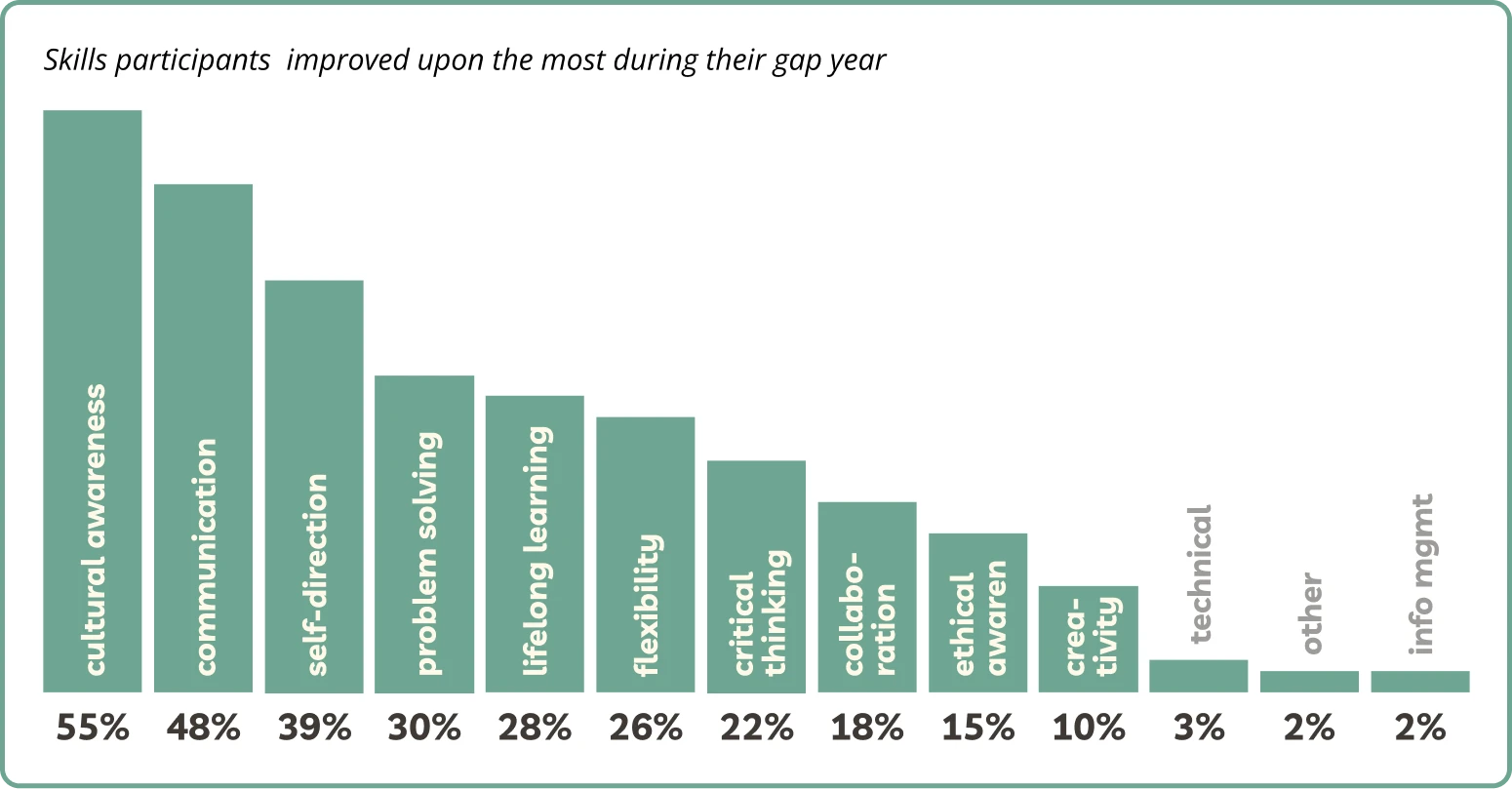
According to responses from a Gap Year Association survey, participants reported significant improvements in various skills, with cultural awareness (55% of respondents), communication (48%), and self-direction (39%) ranking as the most prominently enhanced skills.
Gap experiences are generally transformative for participants, fostering both intrapersonal and interpersonal growth. Participants reported indeed enhanced abilities to interact with people from diverse backgrounds, increased maturity, and heightened self-confidence. Participation in courses to learn and develop specific skill sets was however less influential for most GYA participants. Less than a quarter of respondents reported indeed service work (22%), language learning (21%), and the development of career-related skills (15%) to be among the most significant contributors to the overall learning and growth. And even less attributed the growth to work. While 64% of respondents said that the experience involved academic coursework, only 4% reported indeed that such courses contributed to their learning and development.
Another role played by gap years lies in their ability to shape participants’ future aspirations and successes. 95% of the survey participants reported indeed that their gap experience prepared them for their next step in life (be it schooling or career), providing them with a competitive edge in college and job applications. Additionally, gap years typically influence participants' career trajectories, academic pursuits, and volunteerism, reflecting the profound impact of these experiences on future decision-making and personal growth.
All in all, we can say that the outcomes of gap years highlight the transformative potential of immersive, experiential learning opportunities. By fostering a diverse range of skills, personal growth, and future aspirations, gap years empower participants to navigate the complexities of an interconnected world with confidence, resilience, and a sense of purpose.
What types of Gap Years exist?
The world of gap years is as diverse as the people taking a sabbatical. Each person choosing to leave for such an experience has indeed different reasons and different goals to reach. And this is why no gap year is identical to the others, each one offering unique opportunities for personal and professional development.
But, from work to language learning, what are the most common and popular gap year experiences?
Volunteer work abroad
Volunteer gap year programs offer participants a direct immersion into global issues and community dynamics worldwide. Engaging in such programs allows people to not only contribute to local initiatives but also gain profound cultural insights. And what’s more, the range of available opportunities is huge, catering to diverse interests, from business in fair trade shops to educational support on a global scale. And whether one chooses to work with charities, non-profits, or specific volunteer projects, the experience is inherently enriching.
It is however important to keep in mind that while some organizations offer additional benefits like food, lodging, and even salaries, most volunteering activities require financial support, making it more feasible for those who have enough savings to cover travel and living expenses.
Travel and exploration
Travel and exploration are a quintessential aspect of the gap year experience, offering participants an unparalleled opportunity to dive into diverse culture, forge new friendships, and partake in life-altering adventures.
While it can be costly, traveling during a gap year is not limited to discovering new countries and their landscapes. Many people choose indeed to blend their travel experiences and adventures with language immersion, taking the chance to learn a new language while living with local families for authentic cultural immersion. It is precisely the flexibility of this experience, for itineraries and durations or for activities, to attract many people. Such gap years can indeed cater to all interests and preferences, and the fusion of travel and education (for those who want a more comprehensive experience) really make the gap year a transformative journey of discovery, offering profound shifts in perspective.
Internship and work experiences
Securing internships or work placements during your gap year offers multifaceted benefits, including boosting your resume, financing your adventures, and gaining exposure to diverse work environments.
Whether seeking employment domestically or abroad, options abound for those with a working holiday visa. Opportunities also range from internships at prestigious companies to seasonal positions in resorts and restaurants. So, while this option may be better suited for people with more job skills and experience, anyone can find the right fit for them, with teaching English and working as an au-pair also being popular choices for students with no previous work experience.
However, securing overseas employment often requires a work visa, making it critical to choose one’s activities beforehand in order to have all the paperwork in place before catching the plane.
Engaging in this kind of program offers indeed myriad benefits, fostering fluency and deep cultural understanding of the country hosting you during your experience. Furthermore, immersing yourself in a new language environment allows for holistic growth, not only academically but also personally. By navigating daily interactions in a foreign language, you develop resilience, adaptability, and cross-cultural communication skills, qualities highly sought after in today's globalized workforce.
What’s more, language immersion programs often extend beyond language study, providing rich opportunities for cultural immersion through homestays, volunteer work, and community engagement activities. These immersive experiences allow you to not only learn the language but also gain firsthand insight into the local way of life, customs, and traditions. And as you navigate daily interactions in a foreign language, you'll find yourself forging meaningful connections with locals and people on a gap year alike!
Ultimately, participating in a language immersion program is not just about language acquisition: it's about embarking on a transformative journey of self-discovery and cultural exploration. By embracing the challenges and opportunities of language immersion, you'll emerge from your gap year with a newfound confidence, a broader perspective, and a set of invaluable skills that will serve you well in all aspects of life.
From defining your goals and aspirations to choosing your destination (or more than one if you’re looking to globetrot) to navigating the difficult conversations with your loved ones, there’s a lot to consider and cover before taking the leap.
Setting your goals
Embarking on a gap year journey is a thrilling experience. However, the key to making the most of it lies in the deliberate and strategic setting of goals. So, before embarking on the adventure of a lifetime, here’s what to consider:
Ask yourself questions about your aspirations, interests, and motivations, and then examine your academic inclinations, career ambitions, and personal passions so that you can set meaningful goals that resonate with your innermost desires.
Transcribe all your reflections onto paper to crystallize your thoughts and aspirations. This process will force you to slow down and to reflect on all your responses, transforming those that were abstract ideas into concrete and tangible objectives.
Organize your goals into categories to better focus on your planning process. Segment your aspirations into passion, skill development, adventure, comfort zone expansion, and career-oriented objectives. This approach will enable you to prioritize your goals and allocate resources effectively.
Using your “checklist”, align your personal goals with the objectives of a gap year experience. Evaluate whether your aspirations encompass cultural immersion, community service, skill enhancement, professional development, or personal growth to maximize the transformative potential of your journey.
Evaluate programs based on their alignment with your goals and aspirations. Check their offerings in terms of geographic location, thematic focus, duration, and extracurricular opportunities and then select a program that resonates with your goal. In this way you will set the stage for a purposeful and enriching gap year experience.
Choosing your destination
Choosing the destinations for your gap year is a fundamental step for your experience. So, whether you opt for international or domestic travel, thoughtful consideration and strategic planning are essential. Now, how to select a destination that aligns with your goals, preferences, and budgetary constraints?
The first things to consider are your preferences and constraints. Consider factors such as linguistic immersion, visa requirements, health regulations, preferred activities, and financial feasibility. By meticulously evaluating these considerations, you will lay the groundwork for selecting destinations that resonate with your aspirations.
Analyze your budgetary constraints and explore the cost of living in prospective destinations. Remember to factor in the expenses associated with gap year programs, accommodation, transportation, and daily sustenance so as to assess the financial viability of your favorite destinations.
Reflect on whether you gravitate towards mountains, seaside, rainforests, or city experiences. Make sure to also consider seasonal variations and weather preferences, ensuring compatibility with your desired activities and experiences.
Determine whether you are comfortable navigating a foreign language environment or prefer the familiarity of an English-speaking country. This choice will affect the whole experience!
Think about how many countries you want to visit during your gap year but try to resist the allure of visiting as many destinations as possible within a limited timeframe. Instead, prioritize quality over quantity by creating a select list of must-visit destinations together with secondary and tertiary options, allowing flexibility while maintaining focus on meaningful experiences.
Budgeting for your Gap Year
As you embark on your gap year adventure, financial planning is critical to ensure a smooth and stress-free journey. But how to actually budget and save for your gap year?
Start by evaluating pre-trip expenses. Create a detailed spreadsheet encompassing essential items such as passport fees, visa costs, vaccinations, travel insurance, luggage, and electronics. This way, you will lay the groundwork for effective budget management.
Create a comprehensive budget that includes both one-time expenses and ongoing costs. Factor in variable expenses such as accommodation, transportation, meals, entertainment, and incidental purchases. Adopting a holistic approach, you empower yourself to make informed financial decisions.
Explore diverse strategies to increase your savings and the budget for your gap year. Try seeking additional employment opportunities, freelancing, or helping neighbors with their tasks. Try to be more frugal by implementing a weekly allowance system, and also consider things like moving back home to minimize housing expenses and accelerate savings accumulation.
Consider increasing your budget with fundraising initiatives. Instead of traditional presents, ask for monetary contributions towards your travel fund during birthdays or holidays. And don’t forget to always maintain open communication with generous donors, sharing updates and photographs of your journey to foster engagement and gratitude!
Gathering necessary documents
As you embark on your gap year adventure, meticulous organization of travel documents is essential to ensure a seamless and hassle-free experience. From passports and visas to health insurance and flight itineraries, always remember to get and organize the necessary documents for your gap year journey!
Secure your passport and request your visa. To avoid any last-minute delay and all the stress deriving from it, apply for your passport well in advance and navigate visa applications beforehand by researching requirements and processing timelines for each destination.
Ensure compliance with immunization requirements for your destinations. Consult a travel health professional to find out what are the vaccinations and prophylactic measures recommended for specific regions and make sure to adhere to vaccination schedules to facilitate entry into countries with stringent health regulations.
Evaluate insurance policies to ascertain coverage for medical emergencies, trip cancellations, lost luggage, and other contingencies. Also, while evaluating insurances, align provisions with your anticipated activities and destinations, ensuring adequate protection throughout your gap year journey.
Book plane tickets well in advance and leverage online booking platforms and promotional offers to optimize cost savings and itinerary flexibility.
Make multiple photocopies of essential documents such as passports, visas, travel itineraries, and insurance policies and store them in secure locations, including with trusted contacts at home and in separate luggage compartments. Make sure to also scan and email them to yourself to maintain accessible electronic copies for added security.
Start by telling the reasons and motivations driving your decision to take a gap year. Emphasize the significance of self-discovery, personal growth, and exploration in shaping your academic and career trajectory and make sure to use concrete examples to convey the potential of this experience.
Highlight the tangible benefits of a gap year in fostering academic success, personal development, and career advancement. Evidence and statistics will showcase the positive outcomes of gap years, including higher GPAs, increased maturity, enhanced self-confidence, and accelerated career trajectories. Talk about the gap year as an investment in your future success and fulfillment.
Proactively address misconceptions and myths surrounding gap year programs through informed discourse. Clarify that a gap year is not synonymous with idleness or disengagement from learning but rather a purposeful and structured period of exploration and experiential learning and emphasize your plans for re-engagement with formal education following the experience.
Be understanding towards concerns and objections, recognizing the significance of their apprehensions. Engage in open dialogue, acknowledge their perspective and validate their concerns while talking about the rationale and convictions behind the decision to pursue a gap year and assuring them of your commitment to responsible decision-making.
Introduce the concept of structured gap year programs as a viable and reputable alternative to independent travel. Highlight the rigorous curriculum and support while emphasizing the value of such programs. Position them as a credible and responsible approach to gap year exploration, assuaging concerns and instilling confidence in your planned endeavors.
Overcoming the challenges of a Gap Year
Embarking on a gap year is surely an exciting journey. In between the enthusiasm, it's however important to acknowledge the challenges that may arise along the way.
Dealing with homesickness
Homesickness is a common challenge. However, by adopting proactive strategies, people can effectively manage homesickness and embrace the transformative journey of their gap year experience.
Actively participate in new interests, clubs, or adventures. These are the perfect opportunities to connect with travelers or locals through shared activities and experiences so embrace social interactions with openness and curiosity.
Stay connected with family and friends through regular communication channels to share updates and seek support. This way, you can lean on the support of loved ones during moments of homesickness.
Connect with fellow gap year participants or expats who share similar experiences. Share stories, offer encouragement, and navigate challenges together during your journeys of self-discovery and exploration.
Adapting to a new culture
Embarking on a gap year journey often means immersing oneself in unfamiliar cultures and environments, an activity that presents both opportunities for growth and challenges of adaptation. From overcoming initial culture shock to embracing the richness of cross-cultural experiences, here are some tips to navigate the complexities of cultural immersion!
Set realistic expectations for the adjustment period, and give yourself the necessary time and space to acclimate to your new surroundings before fully immersing yourself in your gap year activities.
Approach your cultural immersion with an open mind and remember that every interaction, whether with locals or fellow travelers, presents an opportunity for learning and growth. So try to engage in conversations with locals to gain insights into their way of life, participate in cultural activities to experience traditions firsthand, and be receptive to new perspectives that challenge your own beliefs!
Prepare yourself for cultural immersion by proactively learning about the customs, traditions, and social etiquette of your host country. Use travel forums, guidebooks, and firsthand accounts to gain a deeper understanding of local norms and practices and research cultural taboos to avoid unintentional faux pas. In this way, you'll feel more confident and prepared to navigate the intricacies of your host culture.
Take advantage of the expertise and support offered by program organizers or local contacts to navigate cultural differences effectively. Reach out to them for advice on cultural adaptation strategies and insights into local customs.
Approach cultural differences with a spirit of curiosity, empathy, and respect. Challenge your own cultural assumptions and stereotypes by seeking out new perspectives and experiences that broaden your worldview and embrace the opportunity to learn from people with diverse backgrounds and worldviews, fostering mutual respect and appreciation for cultural diversity.
Immerse yourself fully in the local community by participating in events, volunteering, or joining cultural activities that allow you to engage with locals and experience the richness of the host culture firsthand. Take part in local traditions, festivals, and rituals to deepen your understanding of the host culture and forge meaningful connections with community members!
Invest time and effort in learning the local language. Take language classes, practice conversing with native speakers, and immerse yourself in everyday interactions to improve your language skills and deepen your cultural understanding. You'll not only enhance your cultural immersion experience but also forge lastingconnections that transcend linguistic barriers, enriching your gap year journey with meaningful cross-cultural friendships.
Managing your finances
During your gap year, effectively managing your finances is essential for a smooth and enjoyable experience. Let's explore in-depth some key aspects of financial management to ensure you're well-prepared for your journey!
Food prices can vary significantly depending on the country and city you're visiting. When planning your budget, research average meal prices in various destinations to estimate your daily expenses accurately. And keep in mind that dining habits and culinary preferences may differ from country to country, influencing your spending patterns!
Finding suitable accommodation that meets your budget and preferences is crucial. Explore a range of options, including hostels, guesthouses, Airbnb rentals, and budget hotels to find out the best fit for your needs and make sure to consider factors such as location, amenities, and reviews.
Make sure to research transportation options in advance and explore alternatives such as public buses and trains. In this way you’ll surely minimize all costs while exploring your destination!
Budget wisely for tours and activities to avoid overspending, mixing free or low-cost alternatives with select paid experiences. Make sure to take advantage of online resources and local recommendations to discover off-the-beaten-path experiences that align with your interests and budget. And remember, some of the most memorable moments arise from unexpected encounters and spontaneous adventures, so keep an open mind as you explore new destinations during your gap year!
Don’t forget to budget for miscellaneous expenses! Set aside a contingency fund to address unexpected expenses and ensure financial stability throughout your journey. By planning ahead and budgeting strategically, you will navigate your gap year with confidence and peace of mind.
Navigating language barriers
As you venture into your destination, you may encounter one common challenge: language barriers. But fear not: overcoming language barriers can be an enriching part of your gap year experience, offering opportunities for cultural immersion and personal growth!
Instead of relying solely on traditional methods, consider the dynamic world of language learning apps. They offer a fun approach to learning new languages and are available for download on a variety of mobile platforms, ensuring that language practice fits seamlessly into your schedule, allowing you to learn anytime, anywhere.
Carry a physical language dictionary or use translation apps. Having quick access to translations will help you navigate everyday situations with confidence!
Enroll in a language school abroad to practice your language skills in a supportive environment. Just make sure to choose a reputable school that aligns with your learning goals and budget.
Engage with locals to enhance your language learning experience. Practicing with them will help you immerse yourself in authentic conversations and cultural experience, accelerating your language proficiency and gaining valuable insights on the local way of life. And you’ll also end up making friends along the way!
Planning a Gap Year in Italy?
Our programs will help you create your own unforgettable Italian story!


.webp)

.webp)
.webp)