Everyone arrives in Italy with a mental checklist of things to eat: pizza in Naples, carbonara in Rome, spritzes in Venice, and gelato everywhere. And you absolutely have to eat them, especially if it’s your first time in Italy. But if you happen to spend more than a couple of weeks here (or if you’re the kind of traveler who is obsessed with local food culture), there’s much more to look into: the dishes that rarely show up on TikTok and Instagram Reels.
These are exactly the dishes you’ll learn about in this article. Because it’s not a list of “top 10 things to eat in Italy,” full of iconic and touristic must-try Italian foods. It’s a list meant for people that want to try something less predictable but still super tasty and safe!
If you think you know focaccia, the Liguria region will correct you very quickly.
Focaccia di Recco is practically a different category of food! Instead of the fluffy bread that comes to your mind when you hear the word “focaccia,” this version uses two paper-thin sheets of dough stretched across a pan and filled with fresh cheese. When put in the oven, the dough crisps up and the cheese inside melts into a warm, slightly tangy paradise.
The town of Recco protects the recipe fiercely, and for good reason. When made properly, the balance of crisp dough and molten cheese is more than addictive. So, if you stop by some Ligurian seaside town and are tired of the classic focaccia, you should definitely try the Recco variant. You won’t be disappointed; I can bet on it!
Not leaving the Liguria region, but moving to its county seat, Genoa, you should definitely try panissa fritta. Especially if you’re wandering around the streets and have not much time for a full-course seated lunch!
Panissa fritta is a street-food staple, though you’ll rarely see it advertised to visitors that normally prefer the classic focaccia. It’s made from chickpea flour cooked into a thick batter, then cooled, sliced, and fried. The result? A delicious golden, crisp bite with a creamy center.
If you want to try it you’ll have to head to one of those tiny fry shops that are along the port or in the center streets. More often than not, you’ll find it right alongside paper cones of mixed fried seafood, just in case you were looking for more food to try!
Rome has many iconic foods, but if you’re looking for something quick and satisfying (the kind of food that never disappoints and everyone loves) you have to try supplì.
They are basically Rome’s answer to arancini: fried rice croquettes made with tomato risotto wrapped around a small piece of mozzarella. Break it open and you’ll see the cheese stretch in a long string, the very reason why Romans call it supplì al telefono.
If you want to try one (or more) you’re in for an easy search. They are everywhere. Inside pizzerie, in tiny takeaway windows, in casual trattorias, and everywhere you can set your eyes on. They’re inexpensive and filling. And if you need a break from exploring Rome, nothing beats a hot supplì!

Ossobuco is one of those dishes that Milan does better than anywhere else. To prepare it, Milanese people generally use veal shanks. They then slowly braise them with wine, vegetables, and broth until the meat collapses at the touch of a fork. Literally. The real payoff of this cooking method, though, is the marrow in the center of the bone, which becomes silky and full of flavor.
Restaurants often serve it with the most typical saffron risotto, which absorbs the braising juices to become even more delicious. It’s hearty and not too heavy, and definitely more elegant than you could expect from a slow-cooked meat dish.
If you want to try Milanese cuisine (something that goes well beyond aperitivo culture and fashionable cafés), this is a dish that will reveal its more traditional side. And, more likely than not, make you want to try even more traditional foods!
In the Piedmont region, especially around the Langhe and Turin areas, people grow up eating agnolotti del plin: just the way others grow up eating lasagna and pizza.
They are tiny, hand-pinched dumplings that are typically filled with a mixture of roasted meats (usually beef, pork, or rabbit) and leafy greens like cabbage. The dough is thinner than most other stuffed pastas and really lets you taste the filling. But what makes them stand out is their restraint: they’re usually served in the roasting juices from the meat or with nothing more than butter and sage. That simplicity really puts all the attention on the filling!
Tourists and travelers tend to overlook them because, let’s be honest, they don’t look “dramatic” or super tasty. But still, they’re worth a try as they carefully represent Piedmontese cooking: precise technique, minimal decoration, and deep flavor.
Venice has always been a city shaped by trade, and sarde in saor is one of the clearest reminders of that history. It started as a smart way for fishermen to preserve sardines for long journeys, but eventually became one of the most iconic lagoon dishes!
The recipe is simple on paper: small fried sardines layered with soft onions cooked down with vinegar. Then, people add raisins and pine nuts for a sweet touch. And it does need to rest, at least a full day, so that everything settles into that sweet-and-sour balance that’s so unmistakably Venetian.
You’ll spot them in almost every bàcaro, usually tucked into the chilled glass counters next to crostini and meatballs. And while most visitors skip it because it looks a little plain, Venetians order it all the time. If you want to taste something locals genuinely eat, start here!
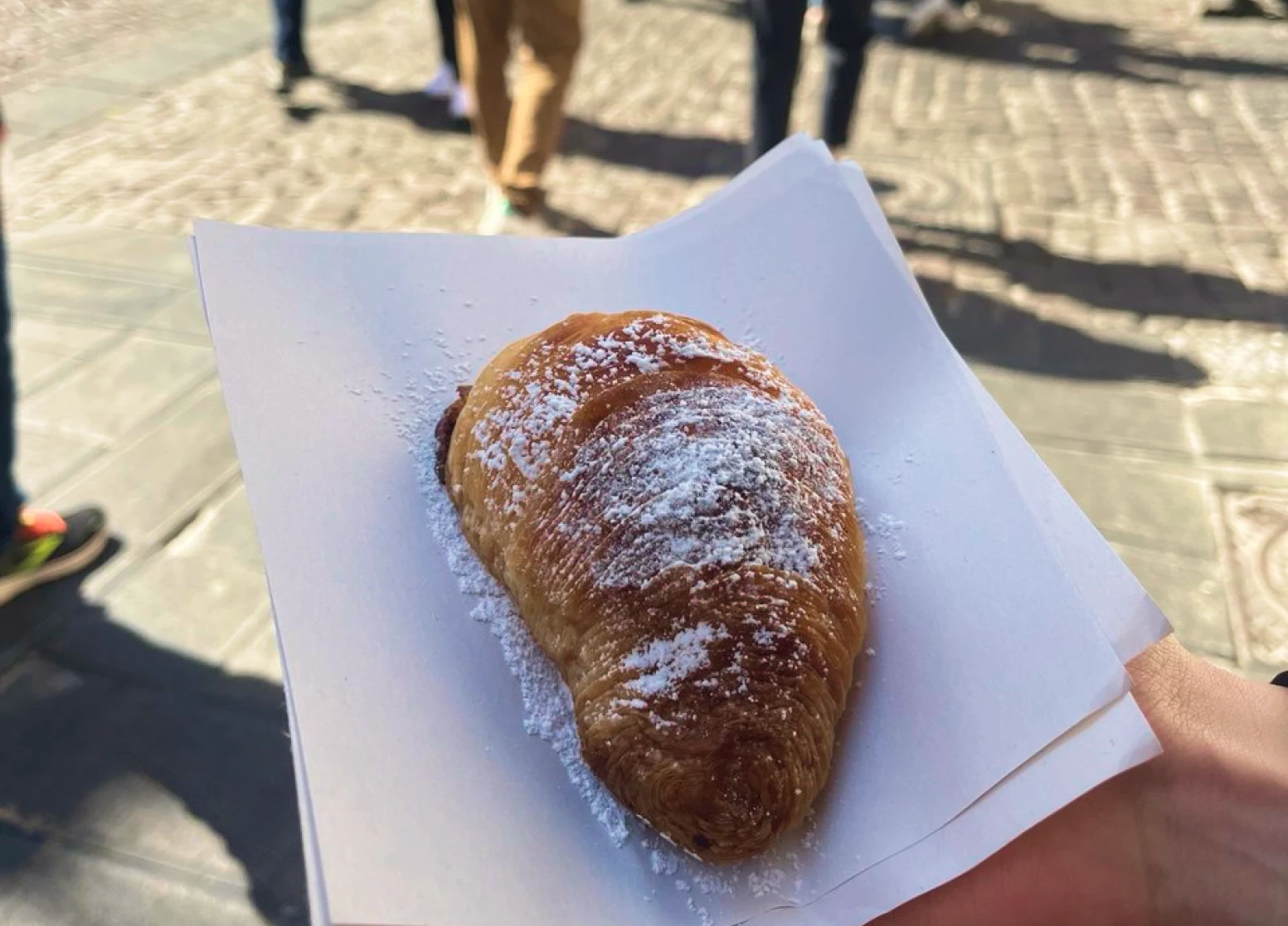
Sfogliatella riccia is one of Naples’ signature pastries, and you’ll understand why as soon as you taste one for yourself.
The pastry is built from dozens of paper-thin layers of dough rolled and shaped into a fan or seashell. Inside, a ricotta filling mixed with semolina and citrus peel. It’s a very “Naples” sort of dessert: bold but still rooted in simplicity. And when it’s made well, everything lines up to create that kind of pastry that’s loved by everyone.
If you’re looking for one, you’ll find them all over the city. But, remember, the good ones come from proper pasticcerie that make them throughout the day. Because you don’t want one that’s been sitting hours behind a glass counter. You want it fresh. And, ideally, still warm.
Caponata is a full-on celebration of Sicily’s fresh and delicious vegetables. The dish, indeed, is entirely built around fried eggplants (which is already delicious by itself) mixed with celery, onions, tomatoes, olives, and capers. And to tie it all together, there’s a fantastic sweet-and-sour sauce.
But, there’s a huge “but” here. The recipe itself is entirely variable and each town and family has its own version of the dish. Some are chunkier, some silkier, some use more vinegar, some are more sweet. It all depends on what people prefer. The only constant? It’s generally served at room temperature, which keeps the flavors bright.
If you spend even just a few days in Sicily, don’t forget to take a break from gelato and arancini to try some caponata. Or try it in every city you visit to experience a different flavor each time!
Florence in winter practically demands ribollita, a dish that comes straight from Tuscan home kitchens rather than restaurants.
What is it? A stew made with cannellini beans, seasonal vegetables, and plenty of cavolo nero, all simmered slowly and then thickened with stale bread. The result is dense, comforting, and incredibly flavorful. But, sorry to tell you, it's not elegant at all.
As the name suggests, ribollita gets even better when it’s reheated (or reboiled) the next day. Everything blends together and the bread softens completely. And the stew becomes the perfect meal to eat after a full day wandering Florence in the colder weather. If you’re looking for something that goes beyond pasta and steak, this is a must!
The best way to do it is by living in the country firsthand for a while!

.webp)

.webp)
.webp)
What is Italianforawhile?


Enrollment and admissions


