Easter, in Italy, isn’t just a day like the others. It’s a day that shows the country's most authentic side by mixing religion, history, food, and social life all in a single holiday. Even Italians who rarely go to church still know what happens during the Holy Week. And, of course, they know all about what to eat on Easter Sunday and where to head on Easter Monday to celebrate with family and friends!
Curious about the double side of Easter? Let’s break it down, from Holy Week rituals to Easter Sunday lunches and the very unofficial chaos of Easter Monday.
Easter is, and has always been, a religious holiday. And in Italy, especially in smaller towns and southern regions, that is still the main focus. Here, the days leading up to Easter Sunday follow a rhythm that hasn’t changed much in centuries.
Holy Week (and Easter celebrations) officially begin with Palm Sunday, a day that commemorates Jesus’ entry into Jerusalem. People, even the less fervent believers, go to church and during mass they receive blessed palm leaves and olive branches. They take them home and place them near doors, windows, or religious images for protection during the upcoming year. It’s really common to see last year’s dried olive branch still hanging somewhere in the house just to be replaced!
This very day also marks a noticeable shift in atmosphere. From Palm Sunday on, indeed, Easter feels closer and closer and preparations intensify.
Just three days before Easter, Holy Thursday focuses on the Last Supper. It’s the day evening masses are held across the country, often including the symbolic washing of the feet too.
The day after, Good Friday, the focus is on the Via Crucis (the Way of the Cross). All across Italy, towns organize processions that retrace Christ’s final steps. Some are simple and quiet, with people walking in silence, while others are elaborate reenactments involving many participants in historical costumes. To each their own. The most famous one? The one that takes place at the Colosseum, led by the Pope.
Just one day before Easter, Holy Saturday is marked by silence and waiting. Churches remain dark until nightfall, when the Easter Vigil begins. Unlike a regular mass, this celebration is built around powerful symbols rather than long rituals.
The vigil opens in complete darkness. A new fire is lit outside the church, and from it the Paschal candle is ignited. Marked with a cross, the Alpha and Omega, and the current year, the candle represents Christ’s victory over death. As it is carried into the church, the words “Lumen Christi” are sung, and the faithful light their own candles. Slowly, the church fills with light, signaling the Resurrection. After days of silence, bells ring again and Easter is officially announced.
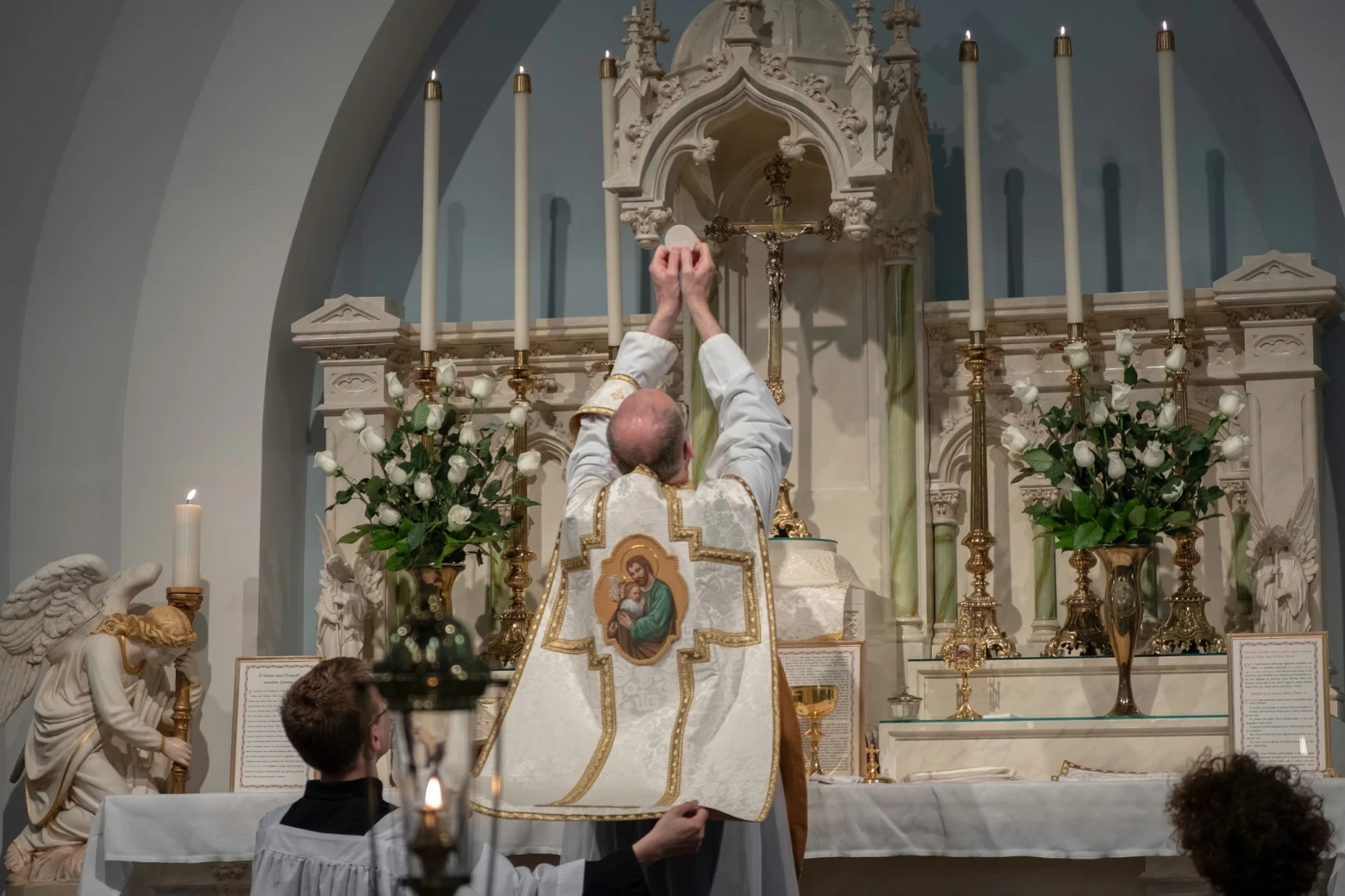
Finally, on Easter Sunday, morning mass is celebrated in churches all over Italy to mark the Resurrection of Christ. While most people attend their local parish, the most visible celebration takes place in Vatican City, where thousands gather in St. Peter’s Square for the Pope’s Easter Mass.
There, at midday, the Pope appears to deliver the Urbi et Orbi blessing, a solemn message addressed “to the city and to the world.” It is one of the most important blessings of the Catholic calendar and is broadcast worldwide. While attendance in the square is free, it’s also extremely limited due to crowds which is why many Italians follow the moment on television. For many, it’s simply part of what Easter Sunday looks and sounds like in Italy!
Alongside religious celebrations, Easter in Italy is also shaped by popular, local traditions. For many people, indeed, Easter is as much about being part of the community as it is about fath. And that’s why towns come alive with local events and entire neighborhoods take part in traditions that have been repeated year after year.
These celebrations often are the most surprising part of Easter for foreigners. Some are solemn, others playful and chaotic. You’ll find anything from parades, games, historical reenactments, and unusual competitions. And because they’re deeply local, they change from place to place. Basically, Easter in a small Umbrian town won’t look anything like Easter in Sicily or a big northern town. And that’s what makes it fun!
In many towns, especially in the south of Italy, Easter traditions include public processions and living reenactments of the Passion of Christ. And it’s more than short, casual events; entire towns are involved, sometimes for hours.
During such celebrations, participants wear historical or biblical costumes and carry statues of Christ and the Madonna while moving slowly through the stress accompanied by music or silence. In some cities, people even reenact scenes from the Passion in sequence, turning the town itself into a stage!
Some Easter traditions move away from solemnity and lean instead into spectacle. One of the best-known examples? Florence’s Scoppio del Carro, a ritual that draws huge crowds every year.
On Easter Sunday, a decorated cart packed with fireworks is pulled through the city to Piazza del Duomo. During mass, a dove-shaped rocket is “launched” from the altar toward the cart. If the fireworks ignite properly, it’s seen as a good omen for the months ahead; if something goes wrong… people notice.
Events like this are interesting because they’re not just religious ceremonies or public shows. They sit somewhere in between. They belong to the city as much as to the church, and they mix faith, folklore, and local history in a way that feels deeply Italian.
Not all traditions are grand or dramatic. Many widespread customs are, on the contrary, simple and rooted in rural life. Take, for example, egg-based games.
All across Italy, during Easter celebrations, people challenge each other in games such as tapping hard-boiled eggs together. The goal is to crack the opponent’s egg without breaking your own. The winner continues until only one person (or better said, one egg) survives. It’s playful but still surprisingly serious in some families.
Other Easter traditions involve people going from house to house singing in exchange for eggs that are later used to prepare communal meals, and many more. They are small traditions, that’s true, but they say a lot about Easter ties to everyday life.
Italy is also home to Easter customs that are hard to classify and definitely harder to forget:
Such traditions may look eccentric but, trust me, they’re taken very seriously by the communities that preserve them.
Our Easter talk is not complete without mentioning food. Easter Sunday lunch in Italy is not just a meal, it’s more like a celebration of abundance. It’s a moment when families gather around tables overflowing with traditional dishes.
At the center of most Italian tables is lamb, often roasted or grilled, accompanied by seasonal vegetables like artichokes, fava beans, and spring greens. And, of course, no Easter Sunday lunch is complete with regional breads and pies that are unique to this holiday like:
At the end of the meal, sweets are equally central:
And of course, no Easter table is complete without chocolate eggs. Adults and children alike love to choose the perfect egg based on flavor and the promise for a special small surprise inside it. Breaking them open is almost as important as the meal itself!
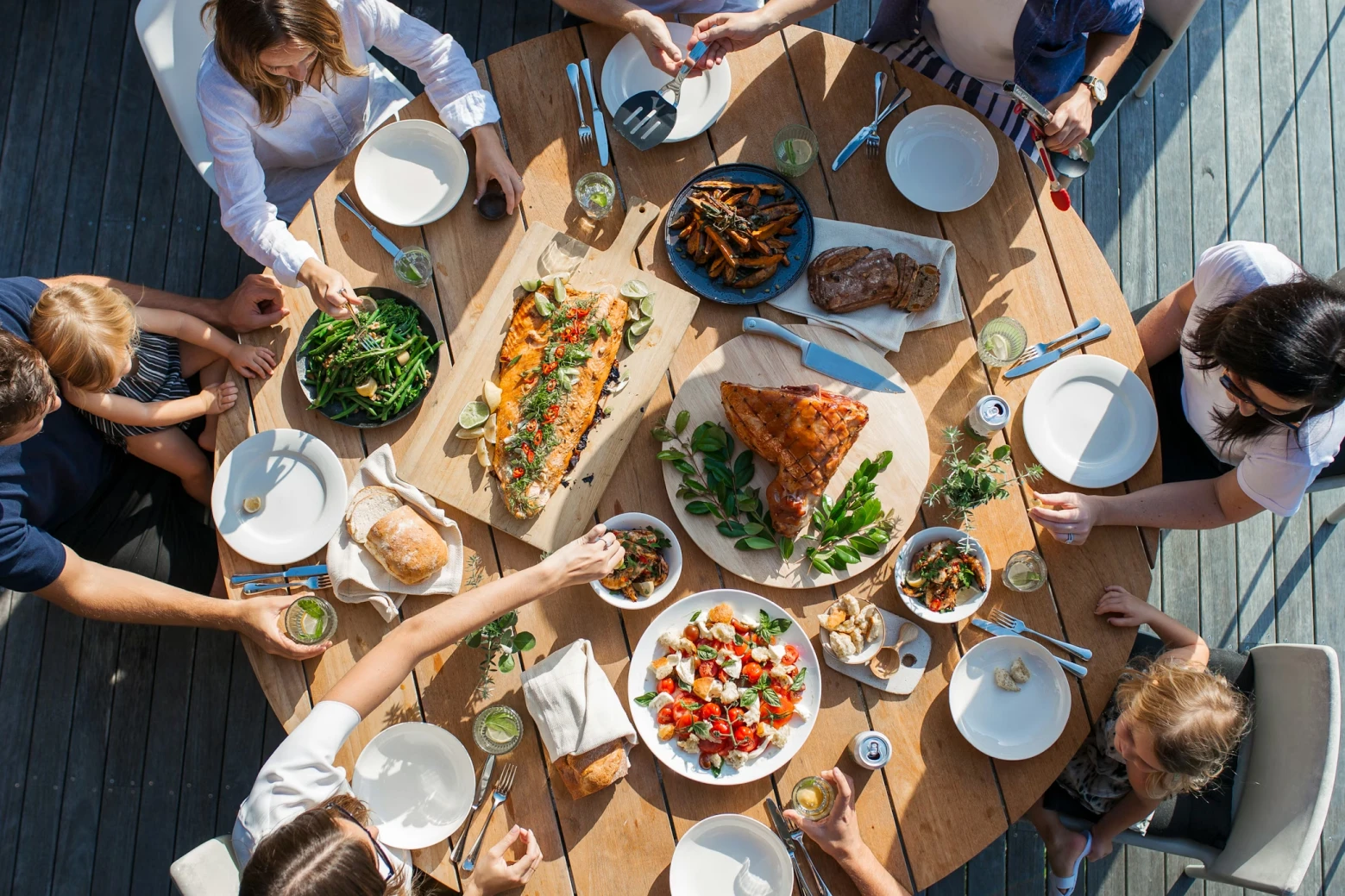
Easter Monday, or Pasquetta, is still a national holiday but it has a totally different vibe from Easter Sunday. Sunday is all about family and tradition. Pasquetta? It’s about friends, getting outside, and enjoying spring.
Food, of course, is still central but in a way more relaxed way. Leftovers from Easter lunch are common, along with grilled meats, fresh bread, cheeses, and seasonal vegetables. And, of course, wine flows freely as groups eat and enjoy the day together.
The overall mood is lively and laid-back. Cities feel quieter but roads fill with travelers. And the weather becomes a frequent topic of conversation (somehow it’s always raining or windy, and we still don’t know why!).
The best way to do it is by living in the country firsthand for a while!

.webp)

.webp)
.webp)
What is Italianforawhile?


Enrollment and admissions


