Italy has always had a way of pulling people in, tourists and international students alike. Maybe it’s the art, maybe the history, maybe the food, maybe the idea of walking past Roman ruins just to get a coffee in a café downtown.
But no matter what sparked your interest. One thing is certain: if you want to study abroad in the country, choosing the best place for it is not as simple as pointing to a random city on a map. And that’s because Italy is not one single experience. It’s many different lifestyles packed into one country.
So, if you’re a student trying to picture your life in Italy for a semester or a year, you might need more than just a list of city names. You need to understand how each place actually feels to live in. Just so you can make a choice you won’t regret.
Before even getting into considering specific destinations, you should take a moment to think about what you want your daily life in Italy to look like. Because, let’s be true, that’s what really defines the best place for you to study abroad in Italy. Not the ranking or the glamour, but the fit.
Ask yourself this: do you thrive in busy, international environments? Or do you prefer somewhere smaller and more manageable?
If you prefer bigger cities, places like Milan and Rome might be a good fit. They are energetic, diverse, and constantly moving. You’ll have plenty of choices for activities, you’ll hear multiple languages everyday, and you’ll meet people from all over the world. They mostly feel like a true international experience in Italy.
If you prefer places where you can recognize faces and walk everywhere, then smaller cities like Florence, Venice, or Salerno are a better choice. They are still big enough to offer a wide choice of activities, but their contained size makes it easier to feel part of the local rhythm and really immerse in true Italy.
Northern Italy tends to feel more structured, international, and business-oriented. The pace is generally faster and people never stop. Public transports, too, are extensive, though life can feel more expensive.
Southern Italy, on the other hand, feels warmer and slower. Social life spills into the streets and people tend to be more friendly. Life is generally much more affordable and food, too, is considered to be the best in the country.
Neither is inherently better. They are just different lifestyles, but they can influence your daily and academic life heavily.
Before choosing a destination for your study abroad in Italy, ask yourself this:
Depending on your answers, you might want to look into different cities to get the experience you’re imagining. For example, places like Milan offer easy travel around Europe and Rome offers nonstop cultural events. Florence feels like living inside an art history book. And for the people needing the sun and the beach, places like Naples and Salerno give access to places like the Amalfi Coast.
Let’s talk honestly. Living in Italy can be expensive. Or not. It depends on what city is on your radar for your study abroad experience.
This means that, depending on your budget, some cities might be more difficult for you to afford. Think about Milan and Rome, they are typically on the higher end compared to smaller cities. Cities like Florence and Venice, instead, fall somewhere in the middle, depending on the neighborhood you choose to live in. And southern cities like Salerno or Naples (alongside small towns everywhere in Italy) tend to be more affordable, especially when it comes to housing and daily expenses.
This doesn’t mean that you should automatically choose the cheapest option you can. But you should definitely be realistic and match your expectations with your budget!
If one of your goals is to improve your Italian (alongside enrolling in academic classes to earn your credits), you should consider how international the city is.
Cities like Milan and Rome are heavily internationalized, which means you can easily get by with English and very little Italian. On the other hand, smaller and Southern cities will force you to practice Italian daily only to be understood by people that know little English.
Milan has always appealed to students who want their time abroad to feel professionally relevant too. That’s because the city isn’t built around tourism or nostalgia: it runs on business, design, finance, technology, and international trade.
That structure shapes your experience from day one. Industry events, trade fairs, and global moments (eg. Milan Fashion Week) are part of the city’s rhythm. International companies are everywhere. Networking is normal. Here, the line between student life and professional life feels thinner than in most Italian cities.
Daily life reflects that structure, with efficient public transportation, well-connected neighborhoods, and students balancing internships with classes. Social life exists too of course, but it can often feel more organized rather than spontaneous: aperitivo culture is strong, that’s true, but evenings generally revolve around specific districts instead of casual wandering.
What does this lifestyle entail in practical terms?
Basically, of all Italian study destinations, Milan stands out for students who want direct exposure to a wide variety of opportunities, and who are comfortable with the cost and pace of life that come with it!

Rome operates on a totally different scale than other Italian cities. As Italy’s political center, it’s home to ministries, embassies, media offices, research institutions, and major universities. And this creates a student environment that feels broad rather than specialized.
In Rome, you are rarely in just one world. That’s because a single week includes far more than just lectures; you’ll always be busy visiting museums, participating in public events, wandering neighborhood markets, and seeing history coming alive at every single corner.
The city, however, is large and decentralized, which means your daily routine depends heavily on logistics, housing, and commute. And on your ability to be flexible. At least, enough to navigate delayed public transportation without losing your temper and to make up plans with friends on a whim on a random day of the week.
What does it mean in practical terms for your study abroad?
We can say that Rome perfectly suits students who are comfortable navigating a large but intellectually stimulating environment. One where culture, politics, and daily life meet constantly.
Florence works differently from cities like Milan and Rome. Mainly because of its scale. The city is, indeed, compact. And that changes everything. Instead of fighting Italian public transportation, here students walk to class. Daily routines, too, form quickly and you just need a few weeks to become familiar with the city itself.
This physical closeness actually creates a contained academic environment where universities, libraries, cafés, and housing sit within the same few neighborhoods. Which, in turn, means that you spend less time commuting and more time in a familiar space. And this predictability, especially for students studying abroad for the first time, reduces the friction and scare of being “alone” in another country. What’s more, Florence has one of the strongest concentrations of international students in Italy, which means that English is widely heard in central areas, making it easier for students who still have to learn Italian.
And what does this mean for you in brief?
Among all study destinations in Italy, Florence, with its small scale and connection with art and literature, works perfectly well for students who value an academically centered environment and prefer structure without the scale of a capital.
Venice literally imposes its geography on your daily life. From day one you have to stop depending on cars but start walking and using water transport. And that limitation reshapes habits pretty quickly, trust me.
Because the space is physically restricted and movements are complicated, the student experience here feels concentrated. Like in Florence, universities and libraries tend to be close to each other, limiting the space students have to move in daily. Also social circles tend to be smaller, making the whole experience more relaxed and manageable.
As you can imagine, the rhythm in the city changes with the season, with certain areas feeling saturated during high tourism periods. This, however, only makes you highly aware of flows (both of residents and visitors alike) and teaches you how to navigate around peak hours and crowded routes to get where you need quickly.
To give you some insights, here’s what you can expect:
With its spatial limits and an environment renowned worldwide for its arts and architecture, Venice is the perfect match for students in culture and art programs that don’t mind a smaller city as a homebase.
Salerno offers a different balance from northern cities. That’s because it’s large enough to have university infrastructure and student services, but also small enough that routines feel personal and manageable.
With Italian dominating daily interaction, integration often happens more naturally. And unlike cities with heavy international student concentrations, in Salerno you are less dependent on English-speaking environments, which can be demanding at first but accelerates language development over time. Also, the city’s coastal position influences lifestyle without overwhelming it and gives you access to nearby towns along the Amalfi Coast.
What does this mean for you as an international student?
In short? Salerno is particularly suited to students who prioritize language immersion, affordability, and contact with local life without wanting to renounce to life and weekend getaways to touristic places.
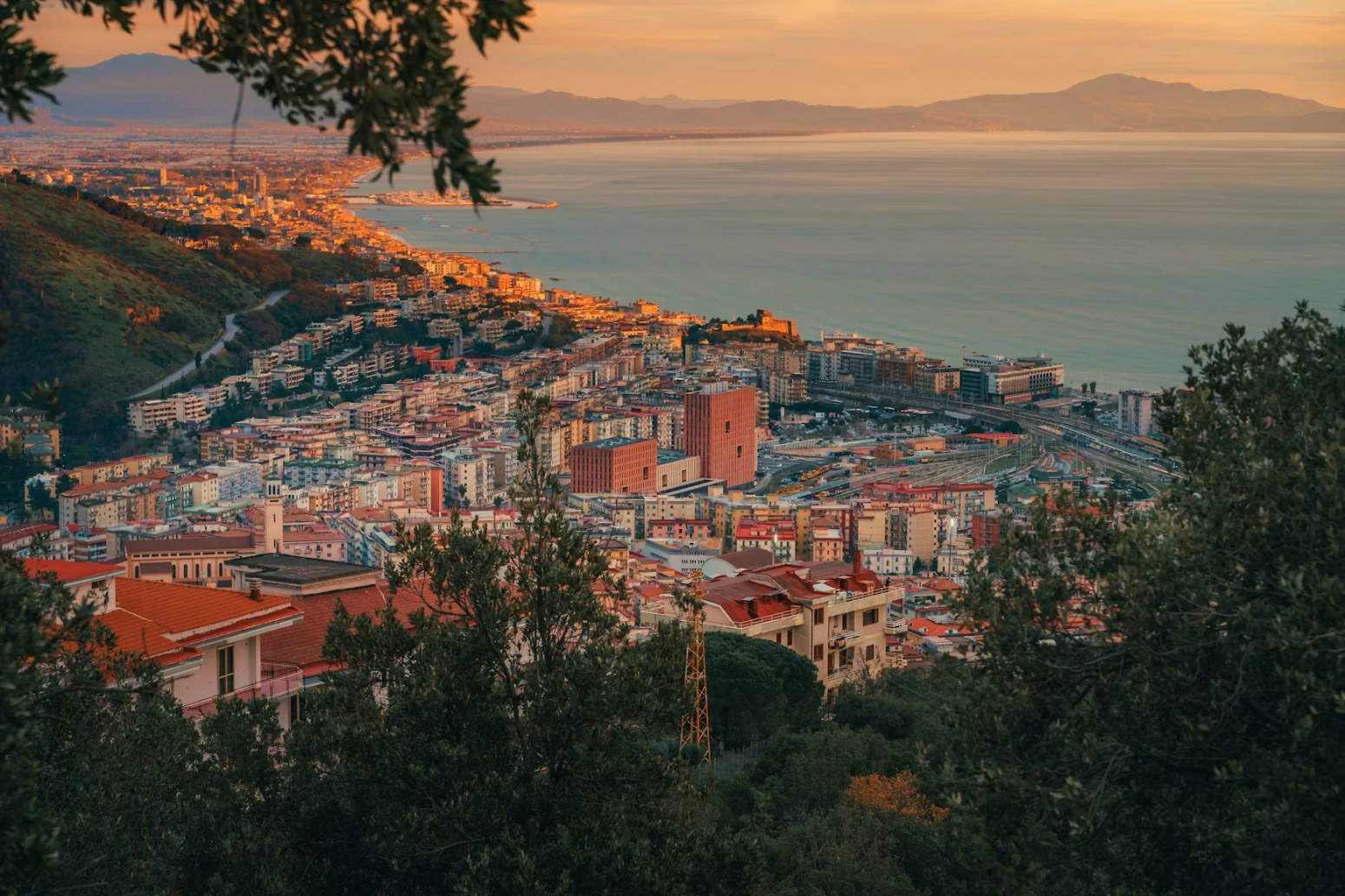
Italy’s study abroad destinations don’t stop with Milan, Rome, Florence, Venice, or Salerno. Depending on what you value the most, indeed, smaller or less obvious cities could be an even better fit for your experience.
Here are a few alternatives that deserve serious consideration!
As you can see, there is no single “best” place to study abroad in Italy. You just have to find the right one, based on how you want to live and study daily, and not just what you want to see.
Our programs will help you create your own unforgettable Italian story!

.webp)

.webp)
.webp)
What is Italianforawhile?


Enrollment and admissions


