Every great journey begins with a single step. Or, in Brian’s case, a one-way ticket to the other side of the world and a sold-off motorbike.
As the founder and CEO of Italianforawhile, he didn't set out to build just another travel company: he wanted to create the experience he once had, the one that fundamentally changed who he was. In this short interview, we sat down with him to discuss how he went from a solo traveler to the heart of a community, and why he believes that sometimes, the most important thing you can do for your life is to simply leave it for a while.
Honestly, there was no master plan. It started in 2014 when I went to Australia for my gap year. At that time, I didn’t know that it would become my career path: I had never left Italy until I was 22, and I just wanted to have fun, learn a language, and explore the country. I had to sell my motorbike to buy a ticket, and eventually I just went.
When I came back, I felt like a different person. I had met so many people from all over the world, and that changed something in me. That was it for a long time. Then, at around 25, I started convincing my friends to leave and have the same experience. And they did. One went to Japan (he’s now married with a Japanese girl and has a baby), one to the US, one to Australia.
Suddenly, I had sent all my friends away, and I was the only one left!
That’s when I realized then that I wanted people to have that same transformative experience here in Italy. With a friend, I started by building software to help Italian language schools manage their incoming students, from documentation to language levels. But then COVID hit, and everything changed. I realized that software wasn’t enough and I really missed the human connection. I wanted to really meet people, I wanted to talk to students and be part of their journey, not just build tools for them. That’s how Italianforawhile was born.

When people think of Italy, they immediately think about the good food, the great weather, and the warm people. Why would you choose not to come to Italy? But there’s a strategic side to it, too. Italy is at the center of Europe. That can turn an experience in Italy into a European experience very quickly and easily: you can travel to London, North Africa, Greece, France or Spain in just around an hour.
Beyond that, it’s a country of distinct personalities. If you want a fast-paced, fashion-forward environment, you choose Milan. If you want another specific vibe, you go to Florence or Naples. Italy is a small country, but the diversification of experiences is massive!
I believe that many programs treat their students like customers. They are bigger, and have a lot of documentation and many policies to follow, but then, when you actually talk to them you don’t feel like you’re talking to a person, but rather to the company. We, on the other hand, treat our students almost like family. We’ve all been in their shoes, and we remember the "pain points": the fear of leaving home, the stress of a visa rejection, or the worry of, “What will I tell my mom?”
When someone’s visa gets rejected, we know it’s not just a paperwork issue; it’s an emotional crisis. We know that feeling. That’s why we are always there to offer emotional support, not just bureaucracy. We really talk and listen to the people. It’s the very basis of what we do every single day. To put it simply, we don’t start our calls by asking, “How much do you want to spend?” but by asking, “Who are you and what do you need?” That’s completely different from other programs.
This is the one thing I think makes the difference. By keeping our destinations limited we can choose only the best ones and offer a supportive environment to our students. That’s because we know the schools. We’ve built a relationship with them over the years. We know the teachers by name and can exchange ideas. If one specific student had a problem in one of our cities, we call the school and they pick the phone up. That’s the secret behind the student experience: a transfer of trust from us to the students and the schools.
It wasn't something we planned when building the team, it just happened. But right now it’s a sort of non-written, non-official requirement for anyone working with us. If you haven’t had a gap experience, you don't understand what’s happening on the other side of the phone. You don't know the fear or the excitement of leaving your country to live in another place for a year. That’s why, when we see "gap experience" or “study abroad” on a CV, that person goes to the top of our list.
We aren't just teaching Italian to our students. That’s the smallest part of the experience. We are actually using Italy as a sandbox to help people build themselves. We provide the tools, the language, and the support, but the student is the one creating their future.
Keeping the "human touch" as we expand. When I’m on a call with a future or current student, I really want to show them Italy in person, but we’re a small team and can’t possibly be with everyone all the time. And we can’t even just condense everything into a brochure or a flyer or a video.
My focus now is on growing the business side of Italianforawhile without losing that core intimacy. I’ve had to move from being the person who talks to everyone to managing the CEO side of things, but I’m committed to staying a "community person” until the end.
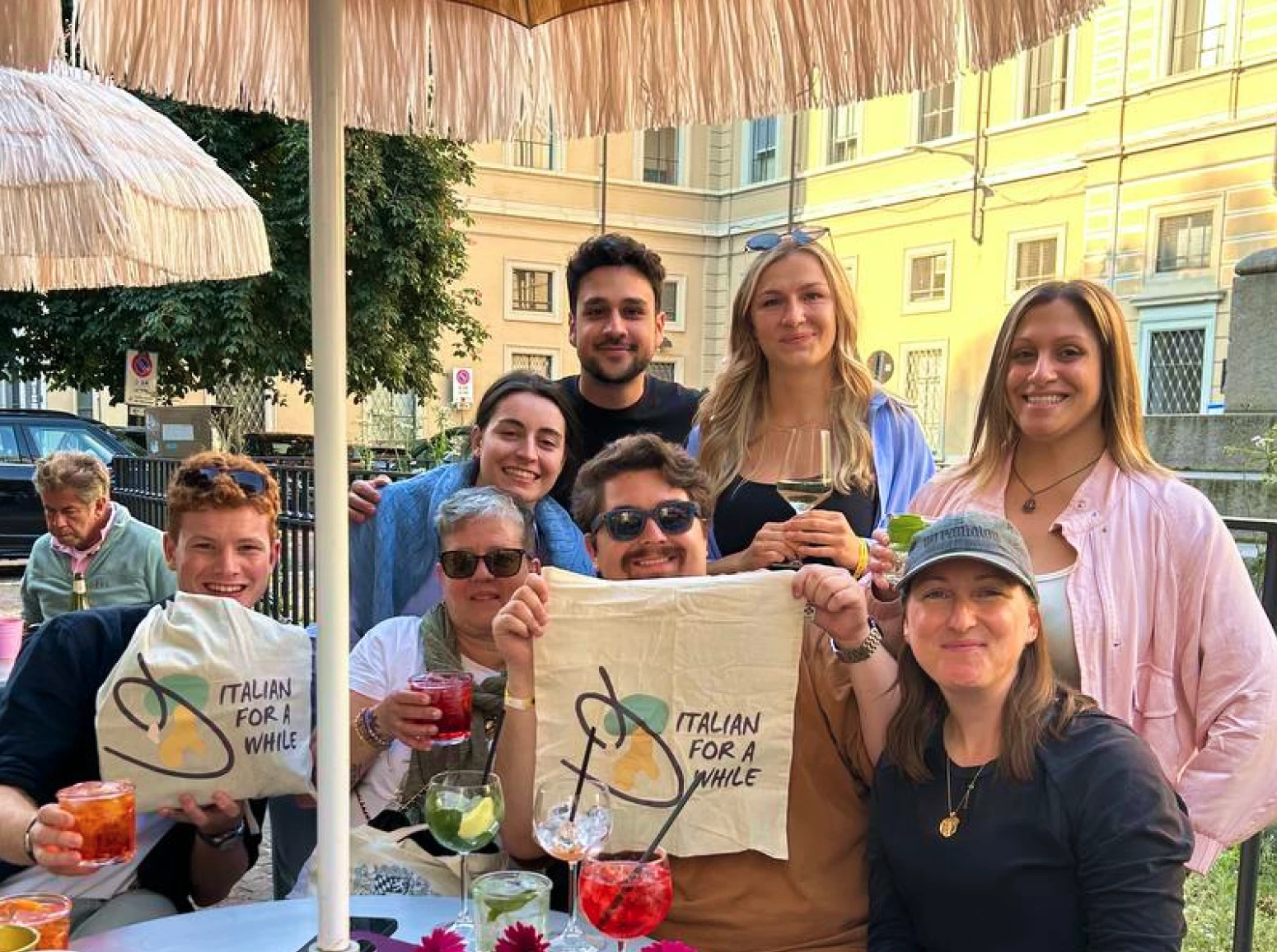
I want to tell them this: You are not a tree. You can move.
You can have your own life, don't listen to the judgment of the people around you. Trust your gut, get prepared, and just go. It is your life and your choice, so make the most out of it.
Our programs combine language learning, cultural immersion, and full support!

.webp)

.webp)
.webp)
What is Italianforawhile?


Enrollment and admissions


