There’s something that happens to a lot of Americans after spending enough time in Italy.
At first, it’s difficult to explain.
Nothing dramatic happens. And surely no one sits you down and tells you that life in Italy is fundamentally different. In fact, most of the differences might even look almost insignificant at the beginning. The trains are late, people spend more time chatting, stores close in the middle of the day, plans feel less rigid, conversations stretch out without anyone checking the time every thirty seconds.
And then, very slowly, you realize that the strange feeling you’ve been having is not really about Italy. It’s more about your own relationship with time.
Because, for many Americans, time is something you have to manage. Use efficiently. Optimize. Save. Fill. Maximize. Choose your own verb. But in Italy? People seem less interested in doing that. And it’s not that they’re not lazy or unmotivated. Just less obsessed with turning every single moment into something useful.
The difference sounds small when you describe it out loud, I know. But once you experience it directly, it becomes surprisingly difficult to ignore. Because it forces you to notice habits you considered normal.
The constant multitasking, the inability to disconnect, the pressure to always be improving yourself, the feeling that free time should be productive too, and that strange guilt you have when you spend too much time doing nothing at all. You don’t even realize how deeply these habits shape your life. Not until you spend some time in a place that relates to time differently. Like Italy.
One of the most defining characteristics of modern American culture is clearly the belief that time should never be wasted.
It’s a mindset that starts early. With students being encouraged to build résumés before they’re old enough to drive hobbies becoming “valuable skills,” free time turning into “extracurricular activities,” and college becoming career preparation.
In a way, success becomes tied to constant forward motion. And eventually, productivity stops being something you do. It becomes part of your identity.
You can see it everywhere in everyday American life.
People answer emails while eating lunch. They listen to podcasts at 2x speed. They feel guilty for relaxing, because even rest needs to be justified and turned into “self-care” or “recovery” or “recharging” before going back to work.
And hobbies? They are not safe from optimization either. Because people don’t just exercise, they track their performance. They don’t read but set reading goals. They don’t enjoy photography, or music, or art. They wonder if those hobbies can become profitable, maybe as a side gig.
There’s always that constant pressure to transform time into a “real achievement.”
And, to be completely fair, that mindset produces results. The US is innovative, ambitious, competitive, and productive. Rewarding initiative and speed creates huge opportunities, for people and the country itself. But there’s also a cost: people become uncomfortable with time that has no measurable outcome. Without the need to be productive at all costs.
This is the part that people struggle to define and explain: Italian life feels less performative.
People are still studying, working, stressing, building careers, and dealing with real life problems. Of course. It’s not like Italy is some sort of magical anti-capitalist paradise where people have no responsibilities. Anyone who has actually lived here learns that quickly.
But there’s less pressure to constantly show productivity. And that changes the atmosphere.
In the US, being busy is, in a way, a sign of importance. Packed schedules become a status symbol. Exhaustion becomes proof of ambition. Skipping lunch to answer emails means you care about work. Saying “I’ve been so busy lately” almost feels like social currency.
But in Italy? People are more comfortable protecting things and experiences that have no productive purpose at all: long conversations, evenings with no plans, time spent outside simply because the weather is nice, moments that exist only because they make life feel enjoyable and human.
And maybe that’s why the Italian lifestyle (the so-called “Dolce vita”) fascinates Americans so much. Because, maybe, many quietly suspect that their own relationship with time has become unhealthy.
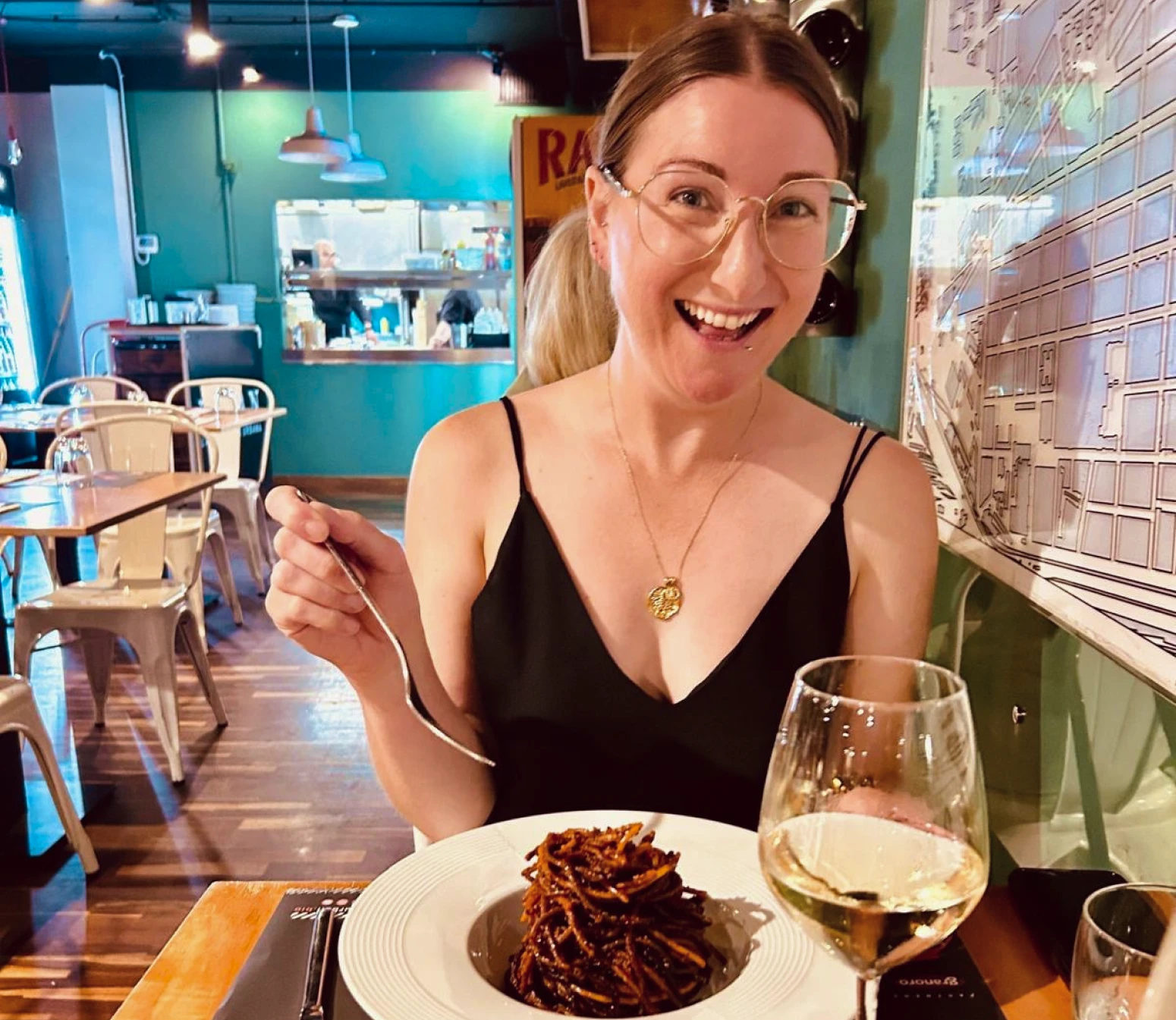
Living and studying abroad in Italy can make people realize just how transactional everyday life back home can feel.
When you live in a world where every conversation becomes networking, hobbies become side hustles, rest becomes recovery, and people introduce themselves through work before anything else, even personal identity becomes tied to achievement.
And I’m not saying ambition and productivity are a bad thing. The problem starts when they are the main framework through which people measure their worth. Because then, life starts feeling like something you manage instead of something you experience.
That’s why the Italian lifestyle feels so different. And, in a way, emotional too. It simply reminds Americans that not every moment needs to justify itself. That yes, you can spend an evening chatting without calling it networking. And you can walk without turning it into exercise. Or simply enjoy a moment or something without needing to monetize it.
Is it simple? Yes. Does it still feel “radical” to some people? Also yes.
Because, let’s be honest, once you experience Italian life, people start to notice. They notice they are uncomfortable with stillness and how often they reach for their phones to find something to do, to fill the silence with. And once you see it, and realize that you can simply exist, it’s something difficult to unsee.
That’s why studying abroad in Italy can feel transformative even when nothing dramatic happens. The change is slow, often about values.
At first, studying and living abroad in Italy just feels exciting. You get to have a new routine and meet new people in a completely different environment. But after a few months? That’s when it happens. You finally start noticing how different life feels, on a daily basis.
You’re not necessarily happier. And not magically stress-free. Just… less rushed.
That’s because Italy interrupts the typical American rhythm. You land, and suddenly you don’t have anything to improve or prepare for. You don’t have to be doing something useful every single day.
And honestly, it can feel strange at first.
When you’re used to living efficiently, slowing down (even just a tiny bit) creates anxiety. People feel guilty. About resting and spending time on things that don’t “lead anywhere.”
But after living in Italy for a while, most students realize that some experiences are valuable precisely because they don’t lead anywhere: a conversation that lasts longer than expected, an evening with no plans, walking somewhere just because you can, spending time with friends without multitasking through it.
Moments that sound small, but slowly change your perception of what everyday life is supposed to feel like.
This is not only important to say. More. Because reducing the conversation to “Italy is goo, America is bad” would make the entire point feel shallow.
Italy has plenty of problems. Bureaucracy can be exhausting, salaries are lower than in the US, opportunities can feel limited, and things move slow. And sometimes it’s frustrating. To Italians and expats alike.
And honestly? Many Italians admire American culture too. The ambition. The innovation. The efficiency. The sense that things there move quickly and opportunities exist. It all feels exhilarating to the average Italian.
But despite that, Americans still love Italian life for a reason.
After all, it offers a different answer to a question many Americans are starting to ask themselves: what is all this productivity for? To make more money? To reach a status? To be even more efficient? To achieve something unknown?
At what point does life stop feeling lived and start being managed?
That’s probably the real reason the Italian lifestyle leaves such a strong impression on people. Because it exposes people to a different version of reality. One where not every moment needs to be justified in order to matter.
Our programs help you experience Italy with support and real cultural immersion!

.webp)

.webp)
.webp)
What is Italianforawhile?


Enrollment and admissions


